
Monk fruit extract has built its reputation on being the natural sweetener with the cleanest taste. Compared to stevia, it is widely described as warmer, rounder, and less bitter. For most people, that reputation holds. But if you have ever opened a monk fruit product and noticed a faint licorice note, a slightly fruity or musty finish, or a lingering sweetness that outstays its welcome, you are not imagining things. Monk fruit does have an aftertaste under certain conditions, and the factors that produce it are entirely explainable.
What Gives Monk Fruit Its Sweetness?
Monk fruit (Siraitia grosvenorii), also called luo han guo, is a small gourd native to the subtropical highlands of southern China. The fruit itself is not eaten fresh. It is harvested, processed, and dried quickly to prevent fermentation, then extracted into a powder or liquid concentrate.
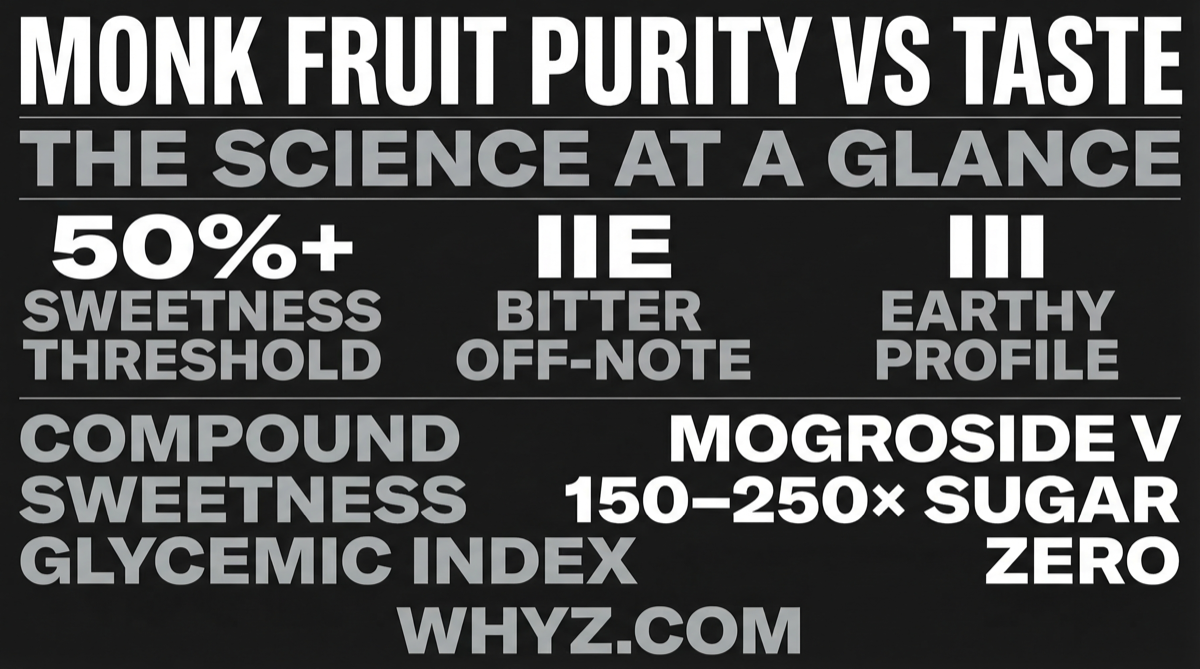
The sweetness comes from a family of compounds called mogrosides, a class of cucurbitane-type triterpene glycosides. Like steviol glycosides in stevia, mogrosides are not metabolized as sugars. They contribute zero calories and have no measurable glycemic impact.
The mogroside family includes several members: mogroside II, mogroside III, mogroside IV, mogroside V, and siamenoside I, among others. These are named by the number of glucose units attached to the mogrol (the aglycone backbone). Mogroside V is the most abundant sweet mogroside in ripe monk fruit and is considered the primary driver of the fruit’s characteristic sweetness, at roughly 250 times the sweetness of sucrose.
Which Mogrosides Cause Aftertaste?
Not all mogrosides taste the same. The relationship between mogroside structure and taste follows a clear pattern: more glucose units attached to the mogrol backbone generally produce sweeter, cleaner taste, while fewer glucose units shift the profile toward bitterness or off-notes.
Mogroside IIE, which has only two glucose units, has been reported in sensory research to produce an unpleasant, bitter-tinged taste. It is found in unripe monk fruit and in lower-grade extracts that do not fully separate glycoside fractions during processing. This compound is a primary culprit in low-quality monk fruit products that taste off or harsh.
Mogroside III exists in multiple forms with varying taste profiles. Some forms carry little sweetness and contribute earthy or bitter character to an extract.
Mogroside V (five glucose units) is the most palatable mogroside, delivering a clean, rounded sweetness. High-quality extracts are standardized to a specific mogroside V percentage, commonly 25%, 50%, or 60%, to ensure consistent flavor.
Siamenoside I is the sweetest mogroside known, estimated at 550 times the sweetness of sucrose. It is present in small amounts and contributes to the overall sweetness profile of extracts without significant off-taste.
The practical conclusion: the aftertaste in monk fruit products is driven largely by the presence of lower-order mogrosides, particularly those with two or three glucose units, which accumulate in extracts made from unripe fruit or with insufficient glycoside fractionation during manufacturing.
Why Does Some Monk Fruit Taste Like Licorice?
A licorice or anise-like quality is the most commonly reported off-note in monk fruit products. It is distinct from bitterness and is worth understanding separately.
The licorice character in monk fruit appears to be caused by a combination of factors. First, the mogrol backbone itself, when not fully glycosylated, has terpenoid aroma compounds that register as herbal or anise-adjacent on the palate. Second, the fruit’s volatile aroma compounds, including furanones and other aldehydes produced during drying and extraction, can carry through into the finished product and contribute to a complex flavor profile that some people read as licorice.
Licorice notes are more prominent in extracts produced by traditional hot-air drying methods, which expose the fruit to higher temperatures for longer periods and produce Maillard-type reaction products with earthy, caramelized off-notes. Extracts produced via lower-temperature vacuum drying or freeze-drying tend to have a cleaner, more neutral flavor profile.
The concentration of monk fruit also matters. At very low use concentrations, monk fruit’s taste is predominantly sweet with a caramel-adjacent warmth. At high concentrations, the background terpenoid character becomes more noticeable, and the licorice impression intensifies. This is why “less is more” applies with high-mogroside-V concentrates.
How Does Extract Purity Affect Taste?
The purity of a monk fruit extract, measured as a percentage of mogroside V or total mogrosides, is the single most important predictor of aftertaste intensity.
Low-purity extracts (10 to 30% mogroside V) contain a substantial proportion of unfractionated glycosides, fruit polysaccharides, organic acids, and volatile compounds. These contribute to complex, sometimes harsh off-notes. These extracts are cheaper to produce and common in bulk ingredient markets, but their flavor is significantly more variable.
Mid-purity extracts (40 to 50% mogroside V) represent the current market standard for most consumer food products. They deliver good sweetness intensity with manageable aftertaste for most people.
High-purity extracts (50 to 60%+ mogroside V) have been more aggressively fractionated to remove low-order mogrosides and extraneous compounds. They are substantially more expensive but produce a noticeably cleaner taste in sensory comparisons.
When shopping for monk fruit sweetener, the label sometimes mentions mogroside V percentage. If it does not, you can often judge quality by the ingredient list: pure monk fruit extract as the only ingredient typically indicates a dedicated fractionated extract, while products that lead with other sweeteners like erythritol and list “monk fruit extract” at the end may contain a small amount of low-purity extract added mainly for label appeal.
Monk Fruit vs. Stevia: Whose Aftertaste Is Worse?
This comparison comes up constantly, and the honest answer is: most people find monk fruit’s aftertaste milder and less disruptive than stevia’s, but individual experiences vary.
Stevia’s bitterness is mediated by specific bitter taste receptors (hTAS2R4 and hTAS2R14) in a well-characterized molecular mechanism. It produces a sharp, sometimes metallic bitterness that is clearly identifiable even to people with moderate bitter sensitivity.
Monk fruit’s aftertaste is more diffuse. It is not primarily a bitterness signal in the same receptor-specific sense. Instead, it tends to manifest as a slightly prolonged sweetness, a faint herbal or licorice quality, or a minor fruity note, depending on the extract grade and processing method. Most people do not describe monk fruit’s aftertaste as “bitter” in the way they describe stevia’s. They are more likely to call it “different” or “not quite like sugar.”
That said, people with high sensitivity to terpenoid flavors, the same compounds that make cilantro taste soapy to some people, may find monk fruit’s aromatic profile more intrusive than average.
For a complete head-to-head comparison of both sweeteners, including taste, cost, and baking performance, see the WHYZ monk fruit vs. stevia guide.
Which Products Minimize Monk Fruit Aftertaste?
Several product characteristics correlate with a cleaner taste:
High mogroside V content (50%+). Look for this specification on the label or product page. It indicates that lower-order mogrosides and extraneous compounds have been removed.
Vacuum-dried or cold-processed extracts. These retain more of the neutral flavor compounds and fewer of the Maillard reaction off-notes from high-temperature drying.
Blends with erythritol. Erythritol has a clean, neutral taste and a slight cooling effect. When blended with monk fruit, it adds bulk and volume that allows the monk fruit concentration to drop while maintaining the target sweetness level. Lower monk fruit concentration means less terpenoid off-note exposure.
Blends with allulose. Allulose is a rare sugar that tastes exceptionally close to sucrose. Monk fruit plus allulose blends are popular in premium keto and low-sugar products because allulose’s neutral sweetness rounds out monk fruit’s profile without adding the cooling sensation of erythritol.
Liquid extracts in small quantities. Liquid monk fruit extract allows for very precise, low-dose additions. Using just a few drops in a large beverage keeps the concentration below the threshold where off-notes become noticeable.
Practical Tips for Reducing Monk Fruit Aftertaste
These strategies work for home cooking and everyday use:
First, use less than you think you need. Monk fruit extract is 150 to 250 times sweeter than sugar depending on mogroside V percentage. Most people over-sweeten on their first attempt, which pushes the concentration into the zone where aftertaste becomes pronounced. Start at one-quarter of the expected amount and adjust upward slowly.
Second, add a small amount of salt. A pinch of sodium chloride suppresses the sweet taste receptors slightly, which can reduce the trailing sweetness that many people perceive as monk fruit’s aftertaste. This technique is well-established in food science and works for all high-intensity sweeteners, not just monk fruit.
Third, pair with acid. Citrus juice, apple cider vinegar, or tartaric acid (used in baking) create a flavor contrast that shortens the sweetness tail. Cold brew coffee with monk fruit and a squeeze of lemon is an example where this contrast works naturally.
Fourth, use bold flavors. Spiced teas, chocolate, coffee, vanilla with a high vanillin load, and citrus zest all carry enough flavor complexity to mask monk fruit’s subtle off-notes. Minimally flavored applications, like plain sparkling water or unflavored yogurt, expose monk fruit’s aftertaste because there is nothing competing with it.
Fifth, store monk fruit properly. Monk fruit extract can absorb moisture and develop off-notes if stored in humid environments. Keep it sealed and away from heat. Degraded product tastes noticeably different from fresh product.
Is the Aftertaste a Safety Concern?
No. Like stevia’s bitterness, monk fruit’s aftertaste is a sensory characteristic, not a warning signal. Monk fruit extract holds GRAS (Generally Recognized as Safe) status from the U.S. FDA and has a documented history of traditional use in China going back at least seven centuries. No adverse effects from typical dietary consumption have been reported in the peer-reviewed literature.
The terpenoid and glycoside compounds responsible for monk fruit’s flavor profile are metabolized differently from sugars and do not accumulate. The off-notes in lower-purity extracts are flavor-active but not biologically problematic.
For more on monk fruit’s safety, glycemic effects, and uses, see the WHYZ monk fruit ingredient page.
Summary
Monk fruit’s aftertaste comes primarily from lower-order mogrosides (particularly mogroside IIE) present in less-refined extracts, combined with terpenoid volatile compounds that produce a licorice-adjacent flavor. The solution is extract purity: products standardized to high mogroside V percentages (50%+), processed at lower temperatures, and blended with neutral sweeteners like erythritol or allulose have substantially less aftertaste than low-purity, unblended extracts. Using monk fruit at lower concentrations, pairing it with acid and bold flavors, and choosing liquid extracts for precise dosing are the most effective everyday strategies. Monk fruit’s aftertaste is milder than stevia’s for most people, but it is not zero, and knowing the variables that control it makes choosing and using the right product much more straightforward.