
Quick Facts
| Property | Details |
|---|---|
| What it is | Natural zero-calorie sweetener from Stevia rebaudiana leaves, standardized to steviol glycosides (Reb A, Reb M) |
| Primary Benefits | Zero glycemic impact, 200–300× sweeter than sugar, may support blood pressure |
| Standard Dosage | Use to taste — ADI: 4 mg/kg body weight/day as steviol equivalents (WHO) |
| Best Time to Take | Anytime — heat stable up to 200 °C; used as a sugar substitute |
| Form | Powder, Liquid Drops |
| Evidence Grade | A (safety) / B (health benefits) — GRAS since 2008, extensive clinical record |
| Key Studies | Anton et al. 2010 — glucose/insulin response (PMID: 20303371); Samuel et al. 2018 — comprehensive review (PMID: 29982648) |
Stevia has become one of the most widely used natural sweeteners on the planet, found in everything from tabletop packets to soft drinks to protein powders. Yet despite its ubiquity, most consumers know very little about what stevia actually is, how different forms taste, or why the ingredient list on one stevia product can look completely different from another.
This guide covers everything you need to know: the botany and history of the stevia plant, the science behind its sweetness, its safety profile across populations, the critical differences between Reb A and Reb M, how to cook and bake with it, and how it compares head-to-head with sugar and monk fruit.
What Is Stevia?
Stevia is a sweetener derived from the leaves of Stevia rebaudiana Bertoni, a perennial shrub in the Asteraceae (sunflower) family native to Paraguay and Brazil. The plant grows 60–80 cm tall with serrated leaves that contain the intensely sweet compounds responsible for stevia’s commercial value.
A Long History of Use
Indigenous Guarani peoples in Paraguay have used stevia leaves for centuries, chewing them for their sweet taste and steeping them in teas and traditional medicines. The Guarani called the plant ka’a he’e, meaning “sweet herb.” European botanists first documented the plant in the late 1800s, with Swiss botanist Moise Santiago Bertoni formally describing it in 1899.
Japan became the first major industrialized country to adopt stevia as a commercial sweetener in the 1970s, after concerns about synthetic sweeteners led the Japanese government to seek natural alternatives. By the early 2000s, stevia-based sweeteners accounted for roughly 40% of the Japanese sweetener market [1].
The United States and European Union were slower to approve stevia. The FDA granted GRAS (Generally Recognized As Safe) status to highly purified stevia extracts (specifically Rebaudioside A at 95%+ purity) in 2008, opening the door to the explosion of stevia-sweetened products now lining grocery store shelves. The European Food Safety Authority (EFSA) followed with approval in 2011.
From Leaf to Extract
The journey from stevia leaf to the white powder in your pantry involves several steps. Fresh or dried stevia leaves are steeped in water to extract the sweet compounds (steviol glycosides). The resulting liquid undergoes filtration, purification, and crystallization to isolate specific glycosides, most commonly Rebaudioside A or, in newer premium products, Rebaudioside M. The final product is a highly purified extract that is 200–350 times sweeter than sugar by weight [2].
Whole-leaf stevia and crude stevia extracts are not the same as purified steviol glycosides. The FDA’s GRAS determination applies only to highly purified extracts (95%+ steviol glycosides), not to whole leaves or crude preparations.
How Stevia Sweetness Works
The sweetness in stevia comes from a family of compounds called steviol glycosides — molecules built on a common steviol backbone with various sugar (glucose) units attached. The specific arrangement of those sugar units determines each glycoside’s sweetness intensity, taste quality, and aftertaste profile.
The Major Steviol Glycosides
Stevioside is the most abundant glycoside in the stevia leaf, typically comprising 5–10% of dry leaf weight. It is approximately 250–300 times sweeter than sucrose but carries a pronounced bitter and licorice-like aftertaste that limits its appeal as a standalone sweetener [2].
Rebaudioside A (Reb A) is the most widely used steviol glycoside in commercial products. It is roughly 200–300 times sweeter than sugar and has a cleaner taste profile than stevioside, though it still exhibits a noticeable bitter or metallic aftertaste at moderate to high concentrations. Most “stevia” products on the market today are standardized to Reb A content.
Rebaudioside M (Reb M) is present in the stevia leaf at very low concentrations (typically less than 1% of dry weight), but it is considered the gold standard for taste among steviol glycosides. Reb M is approximately 200–350 times sweeter than sugar and has a remarkably clean, sugar-like sweetness with minimal aftertaste. Its scarcity in the leaf has historically made it expensive, but advances in bioconversion and fermentation technology have brought costs down significantly [5]. A 2024 review in the Journal of Food Science highlighted Reb M’s superior sensory profile and growing commercial relevance as a next-generation steviol glycoside [8].
Rebaudioside D (Reb D) falls between Reb A and Reb M in taste quality. It has less bitterness than Reb A and is approximately 200–300 times sweeter than sugar. It is sometimes blended with Reb A or Reb M to optimize taste and cost.
Why Some Stevia Tastes Bitter
The bitter aftertaste that many people associate with stevia is primarily a function of which glycoside is used and at what concentration. Stevioside and Reb A activate both sweet taste receptors (T1R2/T1R3) and bitter taste receptors (TAS2R4 and TAS2R14) on the tongue. Reb M, by contrast, has a molecular structure with additional glucose units that significantly reduce interaction with bitter receptors, resulting in a cleaner finish.
If you have tried stevia in the past and found it unpleasantly bitter, there is a strong chance you were consuming a Reb A-dominant product. Switching to a Reb M-based extract can be a dramatically different experience.
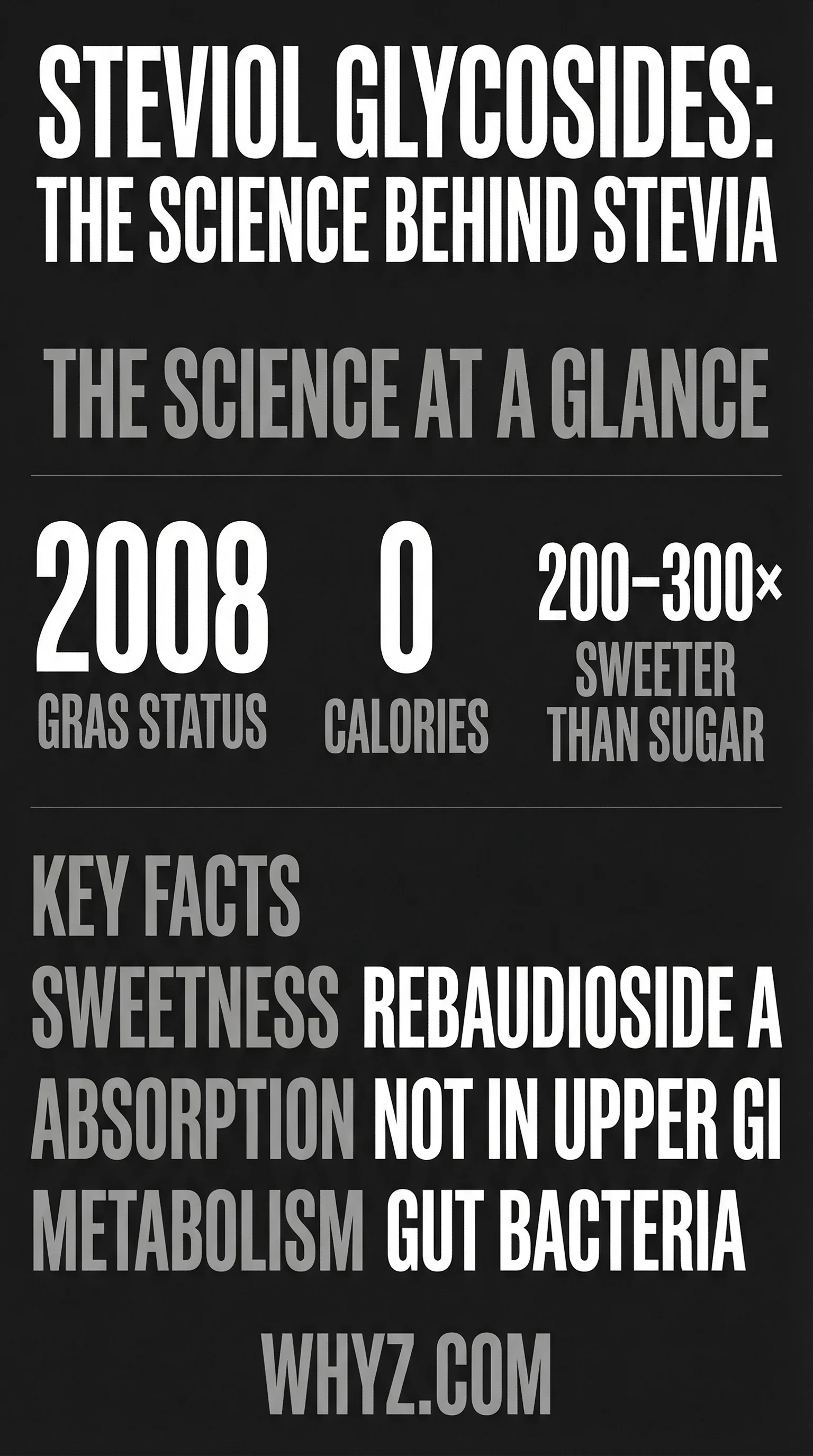
Is stevia safe for long-term use across all populations?
Stevia is one of the most thoroughly studied sweeteners in the world, with decades of safety research supporting its use across populations.
Regulatory Status
- FDA: Highly purified steviol glycosides (95%+ purity) have held GRAS status since 2008. This covers Reb A, Reb M, Reb D, stevioside, and other purified glycosides.
- EFSA (European Food Safety Authority): Approved steviol glycosides as a food additive (E 960) in 2011.
- JECFA (Joint FAO/WHO Expert Committee on Food Additives): Established an Acceptable Daily Intake (ADI) of 4 mg/kg body weight per day, expressed as steviol equivalents [1].
- FSANZ (Food Standards Australia New Zealand): Approved for use with the same ADI.
For a 70 kg (154 lb) adult, the ADI translates to approximately 280 mg of steviol equivalents per day, which is roughly 9–12 tabletop packets of stevia, depending on the product. Most people consume far less than this.
Key Safety Findings
- No carcinogenicity: Long-term animal studies and human epidemiological data show no evidence that steviol glycosides promote cancer [5].
- No genotoxicity or mutagenicity: Thorough genotoxicity testing (Ames test, chromosomal aberration assays, micronucleus tests) consistently shows no mutagenic potential [2].
- No reproductive or developmental toxicity: Multi-generation animal studies show no adverse effects on fertility, pregnancy outcomes, or fetal development [5].
- No effect on blood glucose or insulin: Multiple randomized controlled trials confirm that stevia does not raise blood sugar or insulin levels in healthy subjects or in individuals with type 2 diabetes [3].
- No significant effect on gut microbiota: Current evidence suggests steviol glycosides do not meaningfully alter the composition or function of the gut microbiome at normal dietary doses.
Is Stevia Safe During Pregnancy?
Purified stevia extracts with GRAS status are considered safe during pregnancy at normal dietary amounts. The ADI established by the WHO applies to all adult populations, including pregnant and lactating women. That said, whole-leaf stevia and crude extracts have not been evaluated to the same standard and are generally not recommended during pregnancy. As always, discuss any dietary changes with a healthcare provider during pregnancy.
Is Stevia Safe for Children?
Yes. The FDA’s GRAS designation and the WHO’s ADI apply to children as well, adjusted for body weight. A 30 kg child would have an ADI of approximately 120 mg of steviol equivalents per day. Stevia-sweetened products are a reasonable alternative to sugar-sweetened beverages and snacks for children, though moderation remains appropriate.
Is Stevia Safe for Diabetics?
Stevia is one of the most well-supported sweetener choices for individuals with diabetes. A 2010 randomized crossover study by Anton et al. found that stevia significantly reduced postprandial (after-meal) blood glucose and insulin levels compared to sucrose, without increasing caloric intake or affecting satiety [3]. Stevia has a glycemic index of zero and does not require insulin for metabolism. A 2024 meta-analysis by Zare et al. confirmed these findings across multiple clinical trials, demonstrating that stevia supplementation was associated with significant reductions in fasting blood glucose and HbA1c in individuals with elevated baseline glucose [6]. A 2024 randomized controlled trial by Kwok et al. further found that four weeks of daily steviol glycoside beverage consumption produced no adverse glycemic effects compared to sucrose-sweetened beverages [7].
Types of Stevia
Not all stevia products are created equal. Understanding the different forms on the market is essential for choosing the right one.
Whole Stevia Leaf
Dried, crushed stevia leaves sold as a green powder or loose-leaf tea. This is the least processed form and contains the full spectrum of steviol glycosides, along with plant fibers, chlorophyll, and other naturally occurring compounds. Whole-leaf stevia is sold as a dietary supplement in some markets but does not have FDA GRAS status as a food additive.
Crude Stevia Extract
A partially purified extract that retains a broader mix of steviol glycosides and plant constituents. Often appears as a brownish or greenish powder. Like whole leaves, crude extracts do not hold GRAS status and are not approved for use as food sweeteners in the US or EU.
Purified Reb A Extract
The most common commercial form. These are white, crystalline powders containing 95%+ Rebaudioside A. This is the form found in most grocery-store stevia packets and stevia-sweetened beverages. Taste profile: sweet with a noticeable bitter or licorice aftertaste that intensifies at higher doses.
Purified Reb M Extract
The premium tier. Reb M extracts deliver the cleanest taste among steviol glycosides — closest to sugar, with minimal to no bitter aftertaste. Historically expensive due to Reb M’s low natural abundance in the leaf, but bioconversion processes (using enzymes to convert abundant Reb A into Reb M) have made it increasingly accessible.
Stevia Blends
Many retail “stevia” products blend purified stevia extract with bulking agents such as erythritol, dextrose, maltodextrin, or inulin to create a 1:1 sugar-replacement product that is easier to measure. Read labels carefully. Some of these products contain ingredients (like dextrose or maltodextrin) that do affect blood sugar, potentially undermining the core advantage of using stevia in the first place.
Stevia vs. Sugar: A Direct Comparison
| Property | Sugar (Sucrose) | Stevia Extract (Purified) |
|---|---|---|
| Calories per gram | 4 kcal | ~0 kcal |
| Glycemic index | 65 | 0 |
| Sweetness relative to sugar | 1x | 200–350x |
| Affects blood glucose | Yes | No |
| Affects insulin levels | Yes | No |
| Tooth decay risk | High | None |
| Browning in baking (Maillard) | Yes | No |
| Bulking properties | Yes | No (pure extract) |
| Caramelization | Yes | No |
| Heat stability | Stable | Stable up to 200°C (392°F) |
| Fermentation by yeast | Yes | No |
| Aftertaste | None | Varies by glycoside type |
| Cost per sweetness-equivalent | Low | Moderate to high |
The fundamental tradeoff is clear: stevia eliminates the calories, blood sugar impact, and dental harm of sugar, but sacrifices the bulk, browning chemistry, and neutral taste that make sugar so functionally versatile in cooking and baking.
Stevia vs. Monk Fruit
Stevia and monk fruit are the two dominant natural zero-calorie sweeteners. They share many properties but differ in important ways.
| Property | Stevia | Monk Fruit |
|---|---|---|
| Source plant | Stevia rebaudiana (South America) | Siraitia grosvenorii (China) |
| Active compounds | Steviol glycosides (Reb A, Reb M, etc.) | Mogrosides (primarily Mogroside V) |
| Sweetness vs. sugar | 200–350x | 150–250x |
| Aftertaste (standard form) | Bitter/licorice (Reb A) | Mild fruity/caramel |
| Aftertaste (premium form) | Minimal (Reb M) | Minimal (high Mogroside V) |
| Heat stability | Excellent | Excellent |
| FDA status | GRAS (purified extracts) | GRAS |
| Glycemic index | 0 | 0 |
| Price | Lower (Reb A); moderate (Reb M) | Higher |
| Supply chain | Widely cultivated globally | Primarily grown in Guangxi, China |
| Depth of safety research | Extensive (decades of human data) | Substantial (though less extensive) |
| Taste profile | Cooler, lighter, sharper | Warmer, rounder, more caramel-like |
Which should you choose? If taste is your primary concern and you are using a standard (Reb A) stevia, you may prefer monk fruit for its warmer, less bitter flavor. However, Reb M stevia has largely closed the taste gap and offers a clean sweetness profile comparable to monk fruit at a lower price point. Stevia also has a more extensive body of clinical evidence, which is reflected in its “A” evidence grade versus monk fruit’s “B.” Both are excellent choices, and many people keep both in their pantry and use them in different applications.
How to Use Stevia in Cooking & Baking
Conversion Chart
Because pure stevia extract is 200–350 times sweeter than sugar, extremely small amounts are needed. The following conversions assume a standard purified extract (Reb A or Reb M at 95%+ purity).
| Sugar Amount | Pure Stevia Extract |
|---|---|
| 1 cup (200g) | 1/4 teaspoon |
| 1/2 cup (100g) | 1/8 teaspoon |
| 1/4 cup (50g) | 1/16 teaspoon (a pinch) |
| 1 tablespoon (12.5g) | A small pinch |
| 1 teaspoon (4g) | A tiny pinch |
For stevia/erythritol blend products designed as 1:1 sugar replacements, use the same amount as you would sugar. Always check the specific product’s label for its recommended conversion ratio.
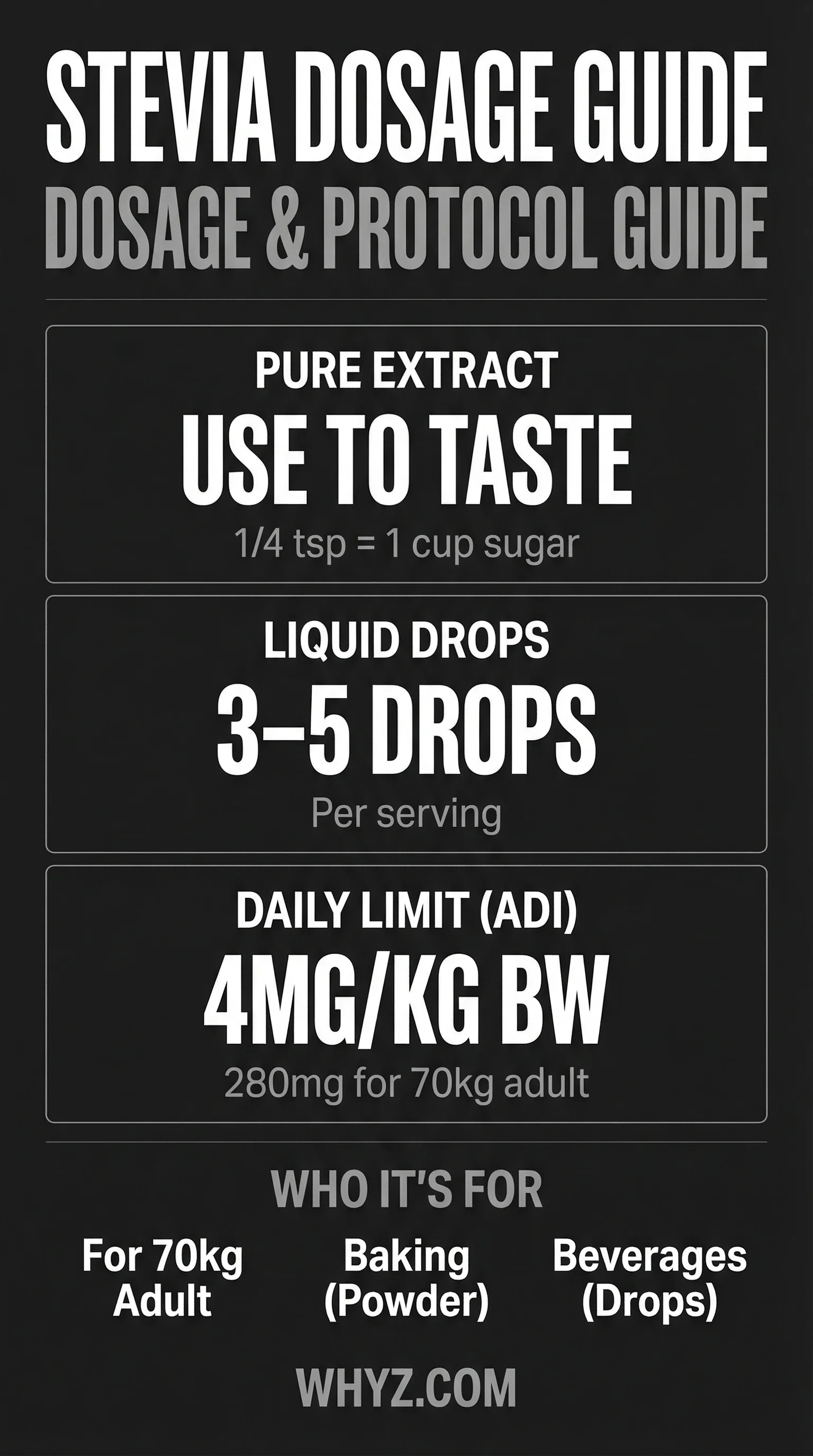
Best Uses for Pure Stevia Extract
- Beverages: Coffee, tea, matcha, smoothies, lemonade, and cocktails. Stevia dissolves cleanly in liquid with no grittiness
- Sauces and dressings: Vinaigrettes, marinades, BBQ sauces, and Asian-style dipping sauces
- Yogurt and oatmeal: A pinch of stevia sweetens a bowl without adding calories
- Protein shakes: Particularly effective for masking the bitterness of unflavored protein powders
- Whipped cream and soft desserts: Mousses, puddings, and panna cotta where bulk is less critical
Where Pure Stevia Extract Struggles
- Cakes, cookies, and muffins: Sugar provides bulk, structure, moisture retention, and browning. Stevia provides none of these. For baked goods, use a stevia/erythritol blend or add bulking agents like allulose or inulin
- Yeast breads: Yeast cannot ferment steviol glycosides, so stevia cannot serve as the sole sweetener in yeast-leavened recipes
- Caramel and toffee: Stevia will not caramelize. These applications require a sugar or allulose base
- Meringues: Sugar stabilizes egg white foam; pure stevia cannot replicate this structural function
Heat Stability
Stevia is highly heat stable, maintaining its sweetness and structural integrity at temperatures up to 200°C (392°F). This makes it suitable for baking, stovetop cooking, and hot beverages. Unlike aspartame, which degrades at high temperatures, stevia will not lose sweetness or produce off-flavors when heated [5].
Tips for Reducing Bitterness
If you are using a Reb A-based stevia and notice bitterness, try these strategies:
- Use less: Bitterness intensifies at higher concentrations; start with half the recommended amount and increase gradually
- Blend with monk fruit: Combining stevia and monk fruit can balance taste profiles and reduce perceived bitterness
- Add a tiny amount of salt: A pinch of salt can suppress bitter notes and enhance perceived sweetness
- Switch to Reb M: If bitterness remains a problem, upgrading to a Reb M-based extract is the most effective solution
What health benefits do steviol glycosides provide beyond sweetness?
While stevia’s primary value is as a zero-calorie sweetener, research has identified several additional bioactive properties of steviol glycosides.
Does stevia help control blood pressure?
Stevia stevioside (750 mg/day) significantly reduced systolic and diastolic blood pressure in patients with mild hypertension — clinical trials summarized by Geuns (2003) confirmed these reductions, with a subsequent study by Hsieh et al. finding sustained blood pressure reductions over one year of stevioside supplementation (PMID: 14693308) [2]. Research shows, however, that the blood pressure effect may be glycoside-specific: a study by Maki et al. (2008) found that Rebaudioside A at doses up to 1,000 mg/day for four weeks did not significantly affect blood pressure in healthy adults with normal or low-normal blood pressure [4]. First, stevioside appears to exert modest antihypertensive effects in hypertensive individuals through vasodilatory mechanisms. Second, Reb A at dietary doses does not appear to meaningfully lower blood pressure in normotensive populations. Third, the discrepancy between glycosides may be explained by differences in molecular structure, dose, and baseline blood pressure of study participants. The current consensus is that stevia may have modest blood-pressure-lowering effects in hypertensive individuals but is unlikely to affect normotensive individuals.
Can stevia reduce inflammation?
Steviol glycosides show anti-inflammatory activity in preclinical models — in vitro and animal studies demonstrate that stevioside inhibits NF-κB and pro-inflammatory cytokine cascades, with a 2012 study confirming stevioside reduced inflammatory markers in a mouse model of atherosclerosis [2]. Research shows these anti-inflammatory effects operate through the same NF-κB pathway targeted by many pharmaceutical anti-inflammatory agents. First, stevioside suppresses NF-κB activation in cell-culture models at concentrations achievable with supplemental doses. Second, reduced TNF-α and IL-6 cytokine levels have been observed in multiple rodent inflammatory models. Third, the molecular structure of steviol glycosides may contribute to membrane-level anti-inflammatory interactions. These findings are preliminary and have not yet been confirmed in human clinical trials evaluating anti-inflammatory biomarkers as primary outcomes.
Antioxidant Activity
Stevia leaf extracts and isolated steviol glycosides have demonstrated antioxidant activity in cell culture studies, scavenging reactive oxygen species (ROS) and reducing markers of oxidative stress. The clinical relevance of this effect at typical dietary doses remains unclear.
How does stevia affect blood sugar regulation?
Stevia actively improves glycemic control beyond simply not raising blood sugar — Anton et al. (2010) found stevia consumption produced lower postprandial glucose and insulin levels compared to sucrose, without compensatory increased food intake, in a randomized crossover study published in Appetite [3]. A 2024 meta-analysis by Zare et al. confirmed these findings across multiple clinical trials, demonstrating that stevia supplementation was associated with significant reductions in fasting blood glucose and HbA1c in individuals with elevated baseline glucose levels [6]. Studies demonstrate that stevioside may enhance insulin sensitivity through AMPK pathway activation, though this mechanism has not yet been fully confirmed in large human trials. For individuals managing type 2 diabetes or metabolic syndrome, stevia’s combination of zero glycemic index and potential active glucose-lowering effects makes stevia one of the most functionally advantageous sweetener substitutions available.
Important Caveat
As with most bioactive compounds studied in sweeteners, the health benefits described above have been observed primarily in vitro, in animal models, or at doses well above typical dietary intake. These findings are scientifically interesting but should not be the primary reason you choose stevia. Choose stevia because it is a safe, effective, zero-calorie sweetener, and consider any additional health effects as a potential bonus, not a guarantee.
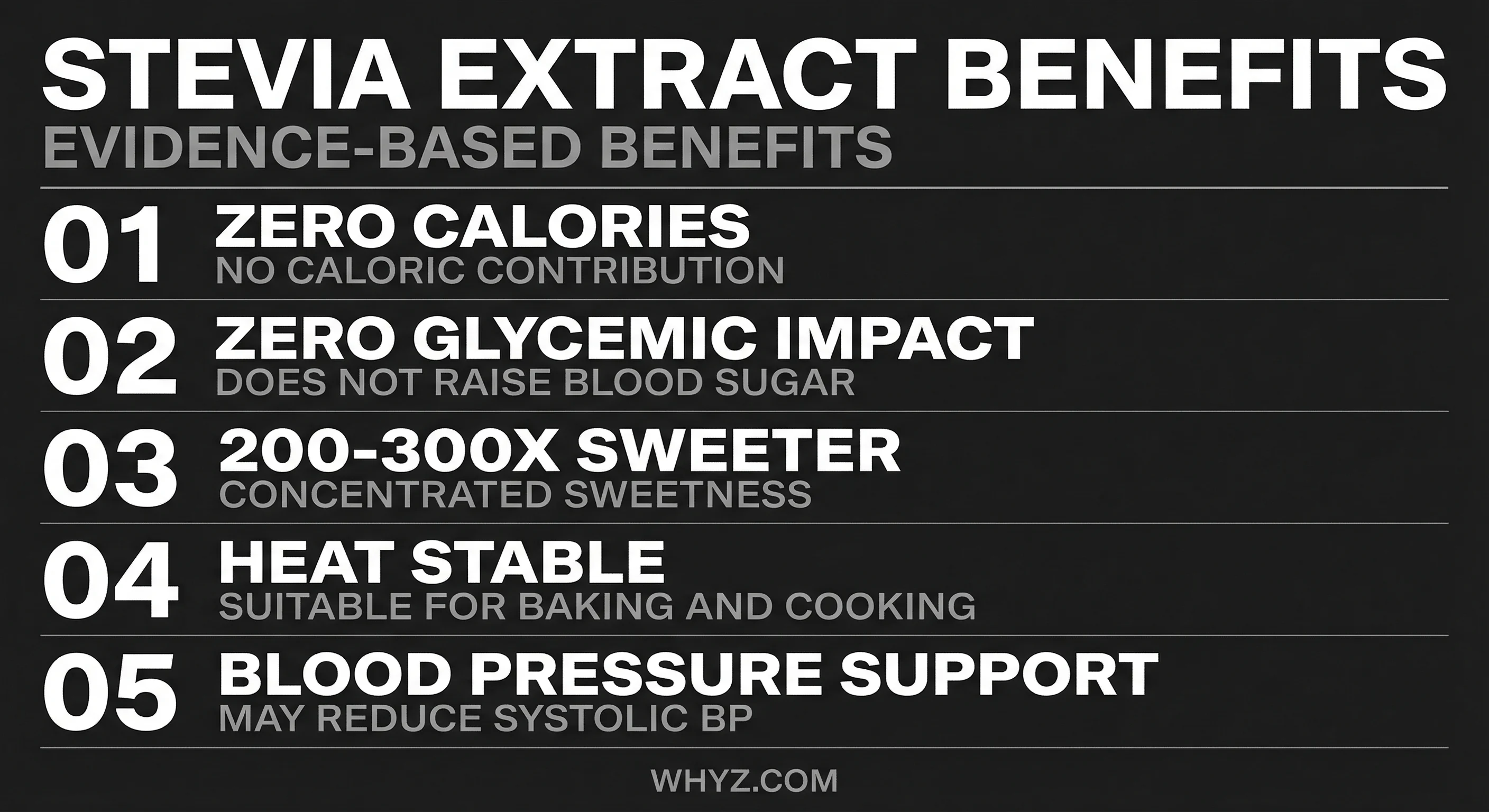
How to Choose a Stevia Extract
The stevia market is crowded, and product quality varies enormously. Here is what to look for:
-
Glycoside type: Check whether the product uses Reb A, Reb M, or a blend. Reb M delivers the best taste. If the label simply says “stevia leaf extract” without specifying the glycoside, it is almost certainly Reb A.
-
Purity: Look for 95%+ steviol glycoside content. Lower purity products may contain residual plant compounds that contribute off-flavors.
-
No hidden sugars or fillers: Many retail stevia products contain dextrose, maltodextrin, or other carbohydrate-based bulking agents that add calories and can raise blood sugar. Read the ingredient list, not just the front label.
-
No artificial sweeteners: Some products blend stevia with sucralose, acesulfame-K, or aspartame. If you are choosing stevia because you want a natural sweetener, make sure the product is actually 100% naturally derived.
-
Third-party testing: A Certificate of Analysis (COA) from an independent laboratory confirms identity, potency, purity, and absence of contaminants (heavy metals, pesticides, microbial contamination).
-
Transparent sourcing: Reputable brands will disclose where their stevia is grown and how it is extracted.
WHYZ Stevia Extract is a high-purity, single-ingredient powder with no bulking agents, no artificial additives, and no hidden sugars. Every batch is third-party tested with a COA available on request.
Frequently Asked Questions
Does stevia raise blood sugar or insulin levels? No. Multiple randomized controlled trials have confirmed that stevia does not raise blood glucose or insulin levels in healthy individuals or in those with type 2 diabetes [3]. Stevia has a glycemic index of zero and is metabolized without requiring insulin.
Why does some stevia taste bitter? The bitter or licorice-like aftertaste associated with stevia is primarily caused by Rebaudioside A (Reb A), the most common steviol glycoside in commercial products. Reb A activates bitter taste receptors on the tongue in addition to sweet receptors. Switching to a Reb M-based product significantly reduces or eliminates this bitterness.
Is stevia safe during pregnancy and breastfeeding? Purified stevia extracts (95%+ steviol glycosides) with FDA GRAS status are considered safe during pregnancy and breastfeeding at normal dietary amounts. Whole-leaf stevia and crude extracts have not been evaluated to the same standard. Consult your healthcare provider with any specific concerns.
Can I bake with stevia? Yes, stevia is heat stable up to 200°C (392°F) and will not lose sweetness when heated. However, pure stevia extract does not provide the bulk, browning, or structural properties of sugar. For baked goods, use a stevia blend with a bulking agent (erythritol, allulose, or inulin) or adjust your recipe to account for the missing volume.
How much stevia is too much? The WHO-established ADI is 4 mg/kg body weight per day expressed as steviol equivalents. For a 70 kg adult, that is about 280 mg/day of steviol equivalents, which is far more than most people consume. Exceeding the ADI occasionally is not considered dangerous, but habitual intake above this level has not been studied as extensively.
Is stevia bad for your gut bacteria? Current evidence does not support the claim that stevia harms the gut microbiome at normal dietary doses. Some in vitro studies have shown that steviol glycosides can interact with gut bacteria, but the clinical significance of these findings is unclear. Large-scale human studies have not identified meaningful gut microbiome disruption from stevia consumption [5].
What is the difference between stevia and Truvia? Truvia is a branded sweetener product that contains Reb A (purified from stevia leaf) blended with erythritol as a bulking agent and natural flavors. It is not pure stevia. The primary ingredient by weight is erythritol. Pure stevia extract contains only steviol glycosides with no bulking agents.
Why Choose WHYZ
WHYZ Stevia Extract is a single-ingredient product with no fillers, no artificial additives, and no proprietary blends. Unlike blended stevia products that list erythritol as the primary ingredient, WHYZ is 95%+ Reb A purity — clean sweetness, minimal aftertaste. Every batch is third-party tested for purity and potency.
- 95%+ Reb A purity — the cleanest tasting steviol glycoside with minimal bitterness
- Pure single ingredient — no erythritol, no natural flavors, no fillers
- Third-party tested — Certificate of Analysis available for every batch
- Transparent labeling — what’s on the label is what’s in the container
Related Ingredients
- Monk Fruit Extract — The closest comparison; warmer flavor profile, same zero-calorie benefit
- Inositol — Metabolic and insulin support; pairs well with a stevia-sweetened low-glycemic diet
Related Guides
- Monk Fruit vs Stevia: Head-to-head comparison of the two most popular natural zero-calorie sweeteners — taste, safety, and best uses.
- Best Sweetener for Keto: How stevia stacks up against monk fruit, erythritol, and allulose on a ketogenic diet.
- Sweetener Conversion Calculator: Interactive tool for converting between stevia, monk fruit, erythritol, and sugar amounts.
Source in Bulk
Looking to source bulk stevia powder for manufacturing or formulation? WHYZ supplies wholesale quantities with COA documentation and free evaluation samples. Request a quote →
References
- Ashwell M. “Stevia, Nature’s Zero-Calorie Sustainable Sweetener: A New Player in the Fight Against Obesity.” Nutr Today. 2015;50(3):129-134. PMID: 27471327.
- Geuns JM. “Stevioside.” Phytochemistry. 2003;64(5):913-21. PMID: 14561506.
- Anton SD, Martin CK, Han H, et al. “Effects of stevia, aspartame, and sucrose on food intake, satiety, and postprandial glucose and insulin levels.” Appetite. 2010;55(1):37-43. PMID: 20303371.
- Maki KC, Curry LL, Reeves MS, et al. “The hemodynamic effects of rebaudioside A in healthy adults with normal and low-normal blood pressure.” Food Chem Toxicol. 2008;46 Suppl 7:S40-6. PMID: 18555574.
- Samuel P, Ayoob KT, Magnuson BA, et al. “Stevia Leaf to Stevia Sweetener: Exploring Its Science, Benefits, and Future Potential.” J Nutr. 2018;148(7):1186S-1205S. PMID: 29982648.
- Zare M, Hasanpour M, Bibak B, et al. “Effect of stevia on blood glucose and HbA1C: A meta-analysis.” Diabetes Metab Syndr. 2024;18(4):102984. PMID: 39098209.
- Kwok D, Bhattacharya S, Peterson RG, et al. “Comparison of a Daily Steviol Glycoside Beverage Compared with a Sucrose Beverage for Four Weeks on Metabolic Parameters.” J Nutr. 2024;154(2):632-640. PMID: 38408729.
- Okonkwo CE, Olayanju AO, Nasiru MA, et al. “A review on rebaudioside M: The next generation steviol glycoside and noncaloric sweetener.” J Food Sci. 2024;89(1):108-122. PMID: 39323262.