
Watch: L-Theanine in 60 Seconds
What Is L-Theanine?
L-theanine (γ-glutamylethylamide) is an amino acid that does not appear in any protein and is found almost nowhere in the human diet except tea. The compound was first identified in 1949 by Japanese researchers who isolated it from gyokuro green tea leaves. It accounts for roughly 1-2% of the dry weight of tea leaves and is the primary reason green tea produces a different subjective experience than coffee despite containing caffeine.
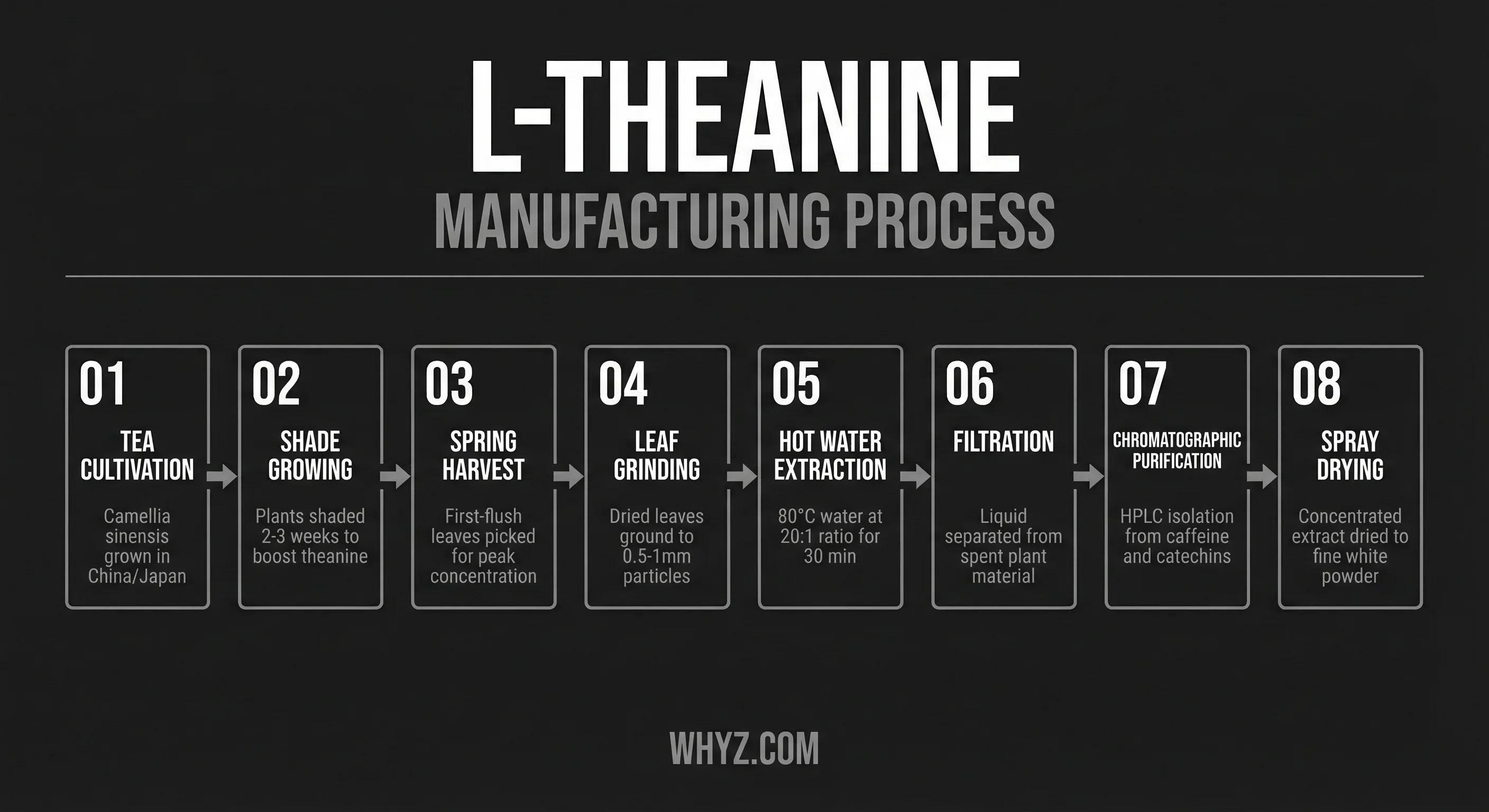
The amino acid is synthesized in the roots of Camellia sinensis and transported upward to the leaves and stems. Spring-harvested, shade-grown teas like gyokuro and matcha tend to have higher concentrations because shading triggers the plant to produce more L-theanine. A typical cup of green tea delivers roughly 25-60 mg of L-theanine, well below the 100-400 mg doses used in clinical research (Juneja et al., 1999).
What makes L-theanine unusual among supplements is its effect profile: it promotes relaxation without sedation. Unlike GABA supplements, which struggle to cross the blood-brain barrier, L-theanine readily enters the brain via the large neutral amino acid transporter (system L). Once there, it influences several neurotransmitter systems simultaneously, producing a state often described as calm alertness.
How L-Theanine Works
L-theanine’s structure is similar to glutamate, the brain’s most abundant excitatory neurotransmitter. This structural resemblance allows it to bind to glutamate receptors, specifically AMPA, kainate, and NMDA , partially block excitatory signaling (Kakuda, 2011). It does not shut down glutamate activity entirely; it modulates it, dampening overactivation without causing suppression.
Beyond glutamate receptor binding, preclinical studies demonstrate that L-theanine influences several neurotransmitter systems:
GABA. Animal studies show increased GABA concentrations in the brain following L-theanine administration. GABA is the primary inhibitory neurotransmitter, and higher GABA activity is associated with reduced anxiety and improved sleep onset (Yokogoshi et al., 1998).
Serotonin and dopamine. Rodent studies indicate that L-theanine raises brain levels of both serotonin and dopamine in a dose-dependent manner (Nathan et al., 2006). These findings have not been directly confirmed in human brain tissue, so the relevance to human mood regulation remains an area of active research.
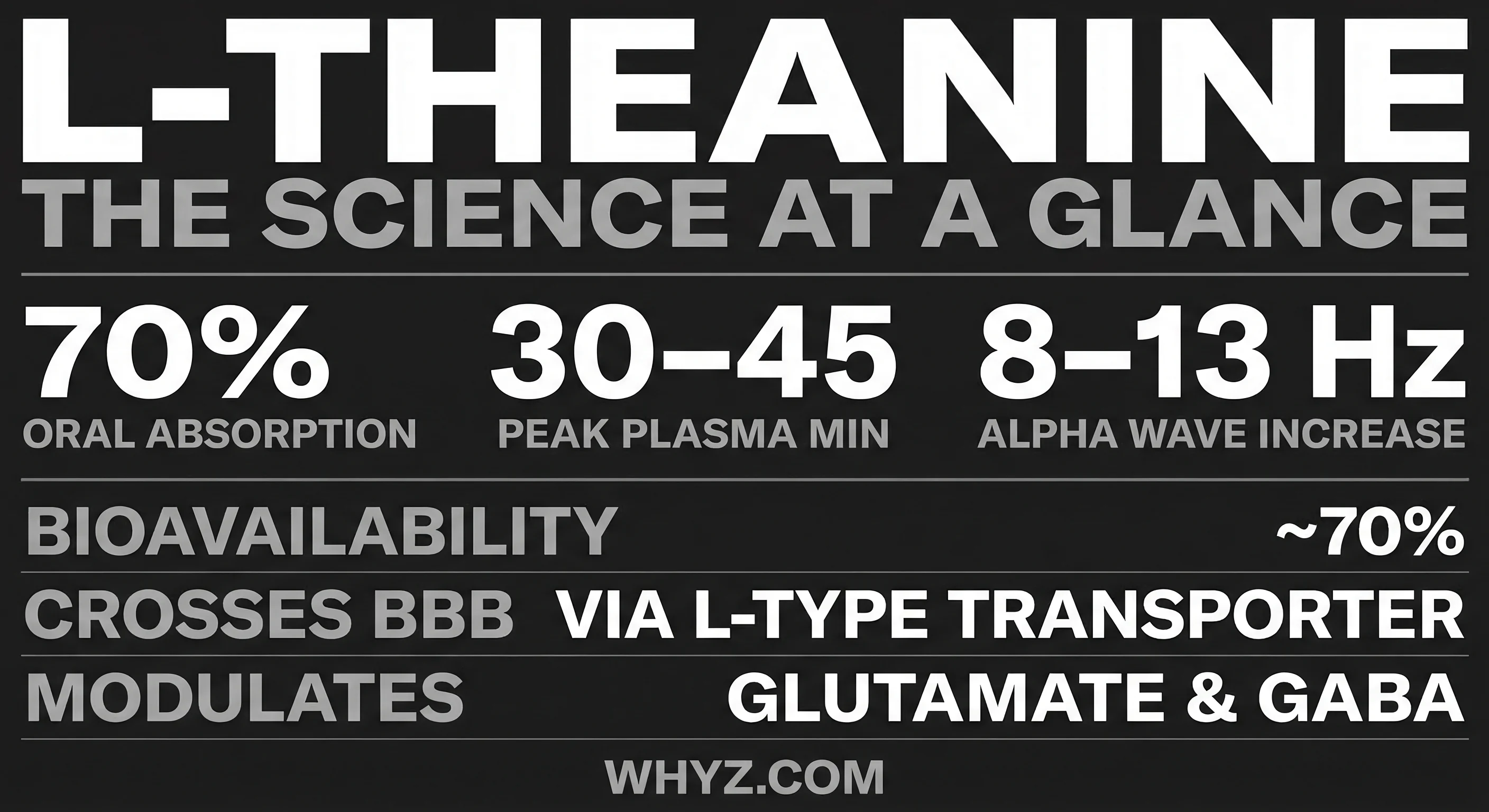
Alpha brain waves. This is where the human evidence is strongest. Electroencephalography (EEG) studies consistently show that 200 mg of L-theanine increases alpha wave power (the frequency band (8-13 Hz) associated with a relaxed but alert mental state). Nobre et al. (2008) demonstrated significant alpha wave increases beginning approximately 45 minutes after ingestion in a placebo-controlled crossover study (Nobre et al., 2008). The effect is more nuanced than simple “boosting,” however. During demanding attention tasks, L-theanine appears to reduce tonic alpha power, which paradoxically indicates enhanced sustained attention rather than relaxation.
Bioavailability. L-theanine is absorbed relatively quickly after oral ingestion, with peak plasma concentrations occurring roughly 30-45 minutes after a dose. Oral bioavailability in animal models is approximately 70% (Scheid et al., 2012). The compound crosses the blood-brain barrier efficiently via the L-type amino acid transporter, which is a significant advantage over many other neuroactive compounds.
Benefits of L-Theanine
L-theanine’s evidence base spans stress reduction, cognitive performance, sleep quality, and cardiovascular function. The strongest data supports its anti-stress effects and the L-theanine/caffeine combination for cognitive tasks.
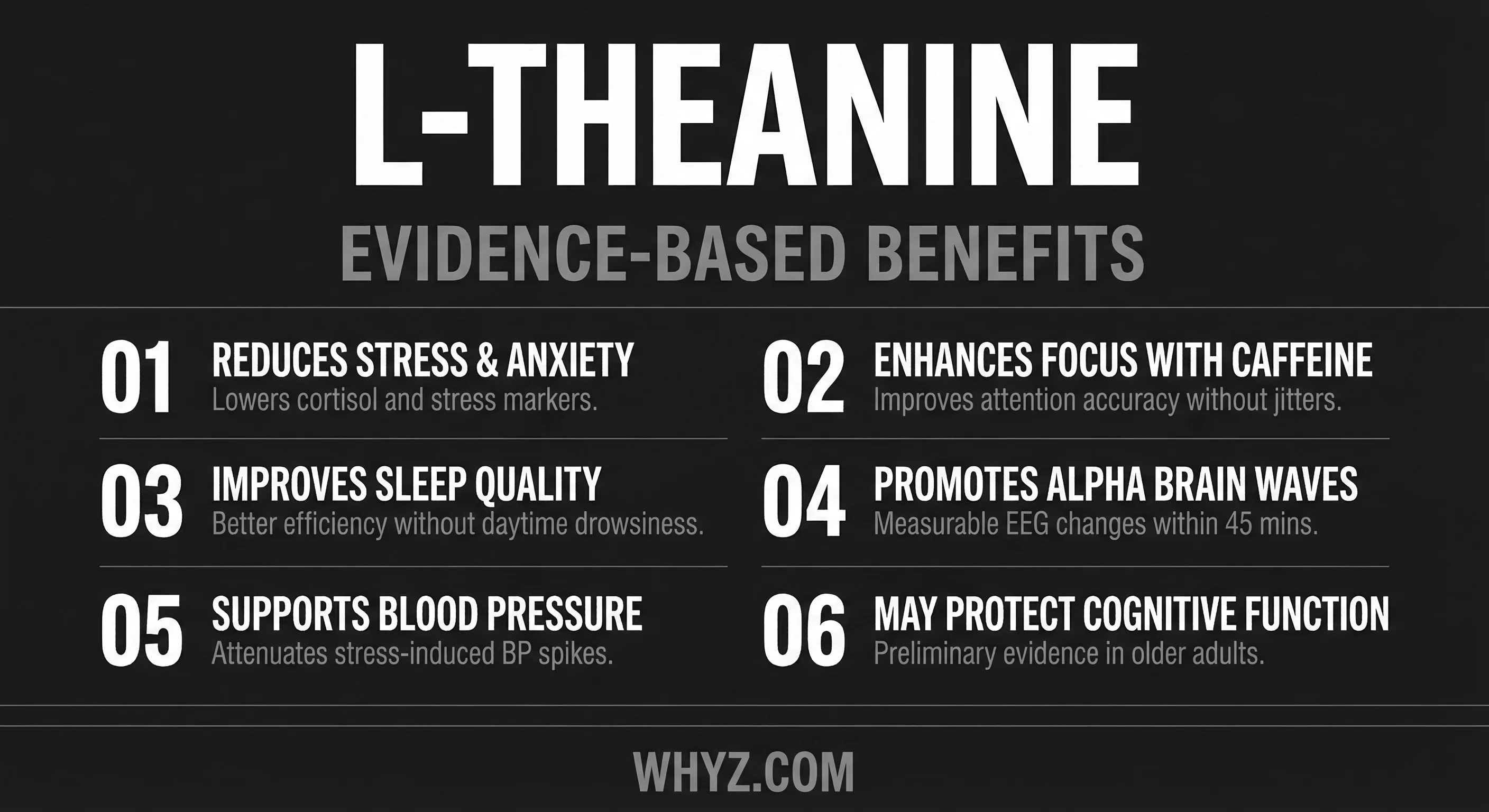
Stress and anxiety reduction is the most studied application. A randomized, placebo-controlled trial in 30 healthy adults found that 200 mg/day of L-theanine for four weeks significantly reduced scores on the State-Trait Anxiety Inventory, the Pittsburgh Sleep Quality Index, and a depression scale (Hidese et al., 2019). A separate four-week RCT using 200 mg/day in pharmacy students under academic stress showed reductions in salivary alpha-amylase, a physiological marker of sympathetic nervous system activation (Unno et al., 2013).
Cognitive enhancement with caffeine is one of the better-replicated findings. Owen et al. (2008) showed that 250 mg of L-theanine combined with 150 mg of caffeine significantly improved accuracy on attention-switching tasks and reduced susceptibility to distraction compared to placebo (Owen et al., 2008). This combination appears to deliver the alertness benefits of caffeine while reducing the jitteriness and anxiety that caffeine alone can produce.
Sleep quality improvements have been reported in several trials. Rao et al. (2015) studied 98 boys aged 8-12 with ADHD and found that 400 mg/day of L-theanine significantly improved sleep efficiency and reduced nighttime activity compared to placebo over six weeks (Rao et al., 2015). A separate study in healthy adults confirmed improved subjective sleep quality without causing daytime drowsiness (Hidese et al., 2019).
For detailed coverage of each benefit with full study citations, see the benefits subpage.
L-Theanine Dosage
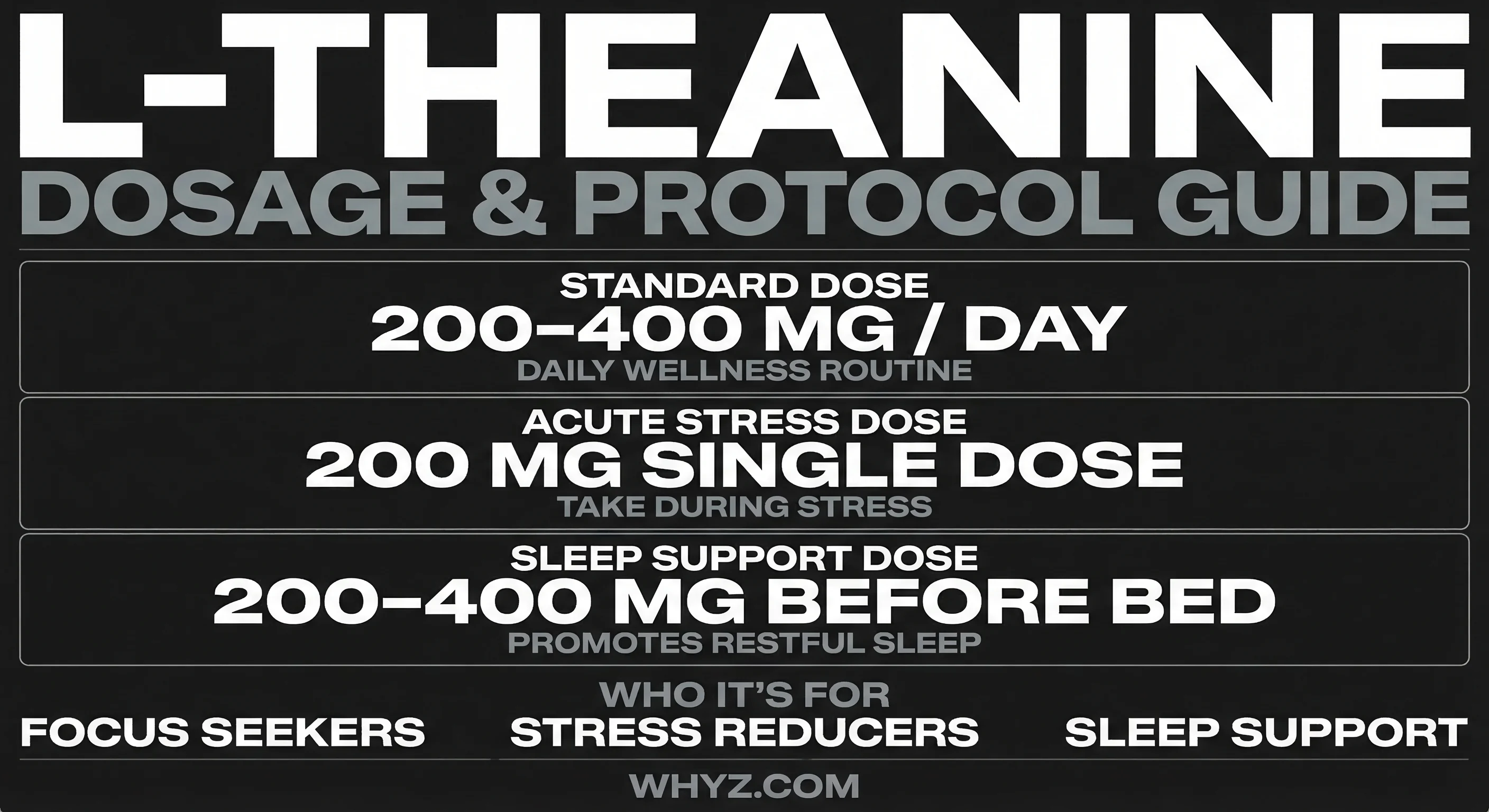
Most clinical trials use doses in the range of 200-400 mg/day. For acute stress relief or cognitive support, a single 200 mg dose taken 30-45 minutes before a stressful event is a reasonable starting point. For ongoing stress management or sleep support, 200-400 mg daily, split into one or two doses, is consistent with the published literature.
L-theanine can be taken with or without food. When combined with caffeine, a 2:1 ratio of L-theanine to caffeine (e.g., 200 mg L-theanine with 100 mg caffeine) is commonly used in research, though the ideal ratio varies by individual sensitivity.
For detailed dosing protocols by application, see the dosage subpage.
Is L-Theanine Safe?
L-theanine has an established safety profile at supplemental doses. Clinical trials lasting up to 8 weeks at 200-900 mg/day report no serious adverse events. The most commonly mentioned side effects in the literature are mild headache and gastrointestinal discomfort, though these occur at rates similar to placebo in controlled trials (Türközü & Şanlier, 2017).
The U.S. Food and Drug Administration has granted L-theanine GRAS (Generally Recognized as Safe) status for use in food. This is not the same as FDA approval of L-theanine supplements, which are not formally reviewed before marketing. L-theanine as a supplement is not intended to diagnose, treat, cure, or prevent any disease.
Two drug interactions deserve attention: L-theanine may amplify the effects of blood pressure–lowering medications, and it may enhance the sedative effects of CNS depressants. People taking either class of medication should consult their healthcare provider before use.
Pregnancy and breastfeeding data is limited. L-theanine excretion into breast milk has not been studied (LactMed, 2025). Most healthcare providers recommend avoiding supplemental L-theanine during pregnancy and breastfeeding due to insufficient safety data rather than evidence of harm.
For the complete safety profile including contraindications and interactions, see the side effects subpage.
Forms of L-Theanine
L-theanine supplements are available in several forms:
Bulk powder is the most cost-effective option and allows flexible dosing. Pure L-theanine powder has a mildly sweet, umami taste that blends easily into water or beverages. This is the form WHYZ offers.
Capsules provide pre-measured doses (typically 100-200 mg per capsule) and eliminate the need for a scale.
Suntheanine is a patented form produced by enzymatic synthesis that contains pure L-isomer theanine. Some clinical trials have used this specific form. Chemical synthesis can produce a racemic mixture of both L- and D-theanine, and the D-isomer has not been studied to the same extent.
Combined products pair L-theanine with caffeine, magnesium, or other ingredients. These can be convenient but make it harder to adjust individual doses.
When evaluating supplements, look for products that specify the isomeric form (L-theanine, not DL-theanine) and have third-party testing for purity.
L-Theanine for Special Populations
Shift workers and high-stress professionals. The combination of L-theanine’s rapid onset (30-45 minutes), lack of sedation, and absence of cognitive impairment makes it practical for people who need to manage stress without compromising performance. Unlike benzodiazepines or alcohol, L-theanine does not impair reaction time or decision-making.
Caffeine-sensitive individuals. If caffeine produces anxiety, heart palpitations, or jitteriness, adding L-theanine may blunt these effects while preserving alertness. The literature supports a 2:1 L-theanine-to-caffeine ratio as a starting point.
Older adults. Sleep architecture changes with age, and L-theanine’s ability to improve sleep quality without sedation may be particularly relevant for older adults who experience fragmented sleep. Safety data in older populations is limited but no age-specific concerns have been identified.
Children with ADHD. The Rao et al. (2015) study used 400 mg/day in boys aged 8-12 with ADHD and reported improved sleep quality with no significant adverse events. This is a single study in a specific population and should not be generalized to all children or conditions.
How to Take L-Theanine
L-theanine dissolves readily in water at room temperature. The taste is , slightly sweet with an umami quality that most people find neutral or pleasant. It can be added to water, tea, juice, or smoothies.
For stress or focus: Take 200 mg approximately 30-45 minutes before a stressful situation, presentation, or focus session. This aligns with peak plasma concentration timing.
For sleep: Take 200-400 mg approximately 30-60 minutes before bedtime. L-theanine is not a sedative; it works by reducing pre-sleep anxiety and promoting relaxation, which may help with sleep onset in people whose sleep difficulties are stress-related.
With caffeine: If you drink coffee or tea, consider taking L-theanine at the same time. A practical approach is 200 mg of L-theanine with your morning coffee. This is not necessary for everyone but may benefit those who find caffeine overstimulating.
Storage. L-theanine powder should be stored in a cool, dry place away from direct sunlight. It is hygroscopic (attracts moisture), so keeping the container sealed is important. Under proper storage conditions, L-theanine has a shelf life of two or more years.
Frequently Asked Questions
Does L-theanine make you drowsy?
No. L-theanine promotes relaxation without causing sedation. EEG studies show it increases alpha brain wave activity, which is associated with wakeful , not the theta or delta waves associated with drowsiness or sleep. This distinguishes it from sedative supplements like valerian or melatonin.
Can you take L-theanine every day?
Clinical trials have used daily dosing for periods of four to eight weeks without reports of serious adverse effects. Some users report diminished effects after prolonged daily use, suggesting tolerance may develop. Taking periodic breaks (one to two weeks off after several months of use) is a reasonable precaution, though the evidence for tolerance development in humans is limited.
How long does L-theanine take to work?
For acute effects (stress reduction, alpha wave enhancement), expect onset within 30-45 minutes after ingestion. Peak plasma levels are reached in roughly the same timeframe. For chronic benefits like overall anxiety reduction and sleep quality improvement, studies showing effects have used daily dosing for at least four weeks.
Is L-theanine the same as theanine?
Functionally, yes. “Theanine” in supplement contexts almost always refers to L-theanine, the naturally occurring isomer found in tea. Chemical synthesis can produce D-theanine or a racemic DL-theanine mixture. The D-form has not been well studied, so look for products labeled as L-theanine specifically.
Can you take L-theanine with coffee?
Yes, and there is clinical evidence supporting this combination. Research shows that L-theanine can reduce the jitteriness and anxiety sometimes caused by caffeine while preserving or even enhancing caffeine’s alertness and attention benefits (Owen et al., 2008).
Who should avoid L-theanine?
People taking antihypertensive medications should use caution, as L-theanine may lower blood pressure further. Those on sedative medications or CNS depressants should also consult a healthcare provider. Pregnant and breastfeeding women should avoid supplemental L-theanine due to insufficient safety data.
Source in Bulk
Looking to source bulk L-theanine powder for manufacturing or formulation? WHYZ supplies wholesale quantities with COA documentation and free evaluation samples. Request a quote →
References
-
Juneja LR, Chu DC, Okubo T, et al. L-theanine (a unique amino acid of green tea) and its relaxation effect in humans. Trends in Food Science & Technology. 1999;10(6-7):199-204. PMID: 10555529
-
Kakuda T. Neuroprotective effects of theanine and its preventive effects on cognitive dysfunction. Pharmacological Research. 2011;64(2):162-168. PMID: 21735448
-
Yokogoshi H, Kobayashi M, Mochizuki M, et al. Effect of theanine, r-glutamylethylamide, on brain monoamines and striatal dopamine release in conscious rats. Neurochemical Research. 1998;23(5):667-673. PMID: 9566605
-
Nathan PJ, Lu K, Gray M, et al. The neuropharmacology of L-theanine (N-ethyl-L-glutamine): a possible neuroprotective and cognitive enhancing agent. Journal of Herbal Pharmacotherapy. 2006;6(2):21-30. PMID: 16930802
-
Nobre AC, Rao A, Owen GN. L-theanine, a natural constituent in tea, and its effect on mental state. Asia Pacific Journal of Clinical Nutrition. 2008;17(S1):167-168. PMID: 18296328
-
Scheid L, Ellinger S, Goss DJ, et al. Kinetics of L-theanine uptake and metabolism in healthy participants are comparable after ingestion of L-theanine via capsules and green tea. Journal of Nutrition. 2012;142(12):2091-2096. PMID: 22214254
-
Hidese S, Ogawa S, Ota M, et al. Effects of L-theanine administration on stress-related symptoms and cognitive functions in healthy adults: a randomized controlled trial. Nutrients. 2019;11(10):2362. PMID: 31623400
-
Unno K, Tanida N, Ishii N, et al. Anti-stress effect of theanine on students during pharmacy practice: positive correlation among salivary α-amylase activity, trait anxiety and subjective stress. Pharmacology Biochemistry and Behavior. 2013;111:128-135. PMID: 23107346
-
Owen GN, Parnell H, De Bruin EA, et al. The combined effects of L-theanine and caffeine on cognitive performance and mood. Nutritional Neuroscience. 2008;11(4):193-198. PMID: 18681988
-
Rao TP, Ozeki M, Juneja LR. In search of a safe natural sleep aid. Journal of the American College of Nutrition. 2015;34(5):436-447. PMID: 25759004
-
Türközü D, Şanlier N. L-theanine, unique amino acid of tea, and its metabolism, health effects, and safety. Critical Reviews in Food Science and Nutrition. 2017;57(8):1681-1687. PMID: 27396868
-
LactMed. Green Tea. In: Drugs and Lactation Database (LactMed). Bethesda (MD): NICHD; 2006–. Updated 2025. PMID: 30000907
-
Kimura K, Ozeki M, Juneja LR, et al. L-theanine reduces psychological and physiological stress responses. Biological Psychology. 2007;74(1):39-45. PMID: 16930802
-
Dodd FL, Kennedy DO, Riby LM, et al. A double-blind, placebo-controlled study evaluating the effects of caffeine and L-theanine both alone and in combination on cerebral blood flow, cognition and mood. Psychopharmacology. 2015;232(14):2563-2576. PMID: 25761837
-
Baba Y, Inagaki S, Nakagawa S, et al. Effects of L-theanine on cognitive function in middle-aged and older subjects: a randomized placebo-controlled study. Journal of Medicinal Food. 2021;24(4):333-341. PMID: 33578876