
Quick Facts
| Property | Details |
|---|---|
| What it is | Hydrolyzed bovine collagen peptides (Type I & III) — the body’s primary structural protein, enzymatically broken down for absorption |
| Primary Benefits | Skin elasticity & hydration, joint comfort, hair & nail strength |
| Standard Dosage | 2.5–15 g daily (skin: 2.5–10 g; joints: 10–15 g) |
| Best Time to Take | Anytime — mix into beverages or food; vitamin C co-intake supports synthesis |
| Form | Powder |
| Evidence Grade | A (skin) / B (joints) — multiple systematic reviews confirm skin benefits; joint RCTs are strong |
| Key Studies | Pu et al. 2023 — skin meta-analysis (PMID: 37432180); García-Coronado et al. 2019 — OA meta-analysis (PMID: 30368550) |
Watch: Collagen Peptides in 60 Seconds
What Is Collagen?
Collagen is the most abundant protein in the human body, accounting for roughly 30% of total protein mass. It forms the structural scaffold of skin, tendons, ligaments, cartilage, bone, blood vessels, and the gut lining. The word itself derives from the Greek kólla, meaning glue, fitting for a molecule whose primary job is holding tissues together.
At the molecular level, collagen consists of three polypeptide chains wound into a triple-helix structure. This architecture gives collagen fibers their characteristic tensile strength. At least 28 distinct collagen types have been identified in mammals, but types I, II, and III account for roughly 80–90% of the collagen in the human body. Type I dominates in skin, bone, and tendons. Type II concentrates in cartilage. Type III co-localizes with type I in skin and blood vessel walls.
Endogenous collagen production peaks during the late teens and early twenties, then declines at an estimated rate of 1–1.5% per year beginning around age 25. By age 60, the body produces roughly half the collagen it manufactured at age 20. This progressive decline manifests visibly as wrinkles, thinning skin, and joint stiffness, and internally as weakened bone matrix and slower wound healing.
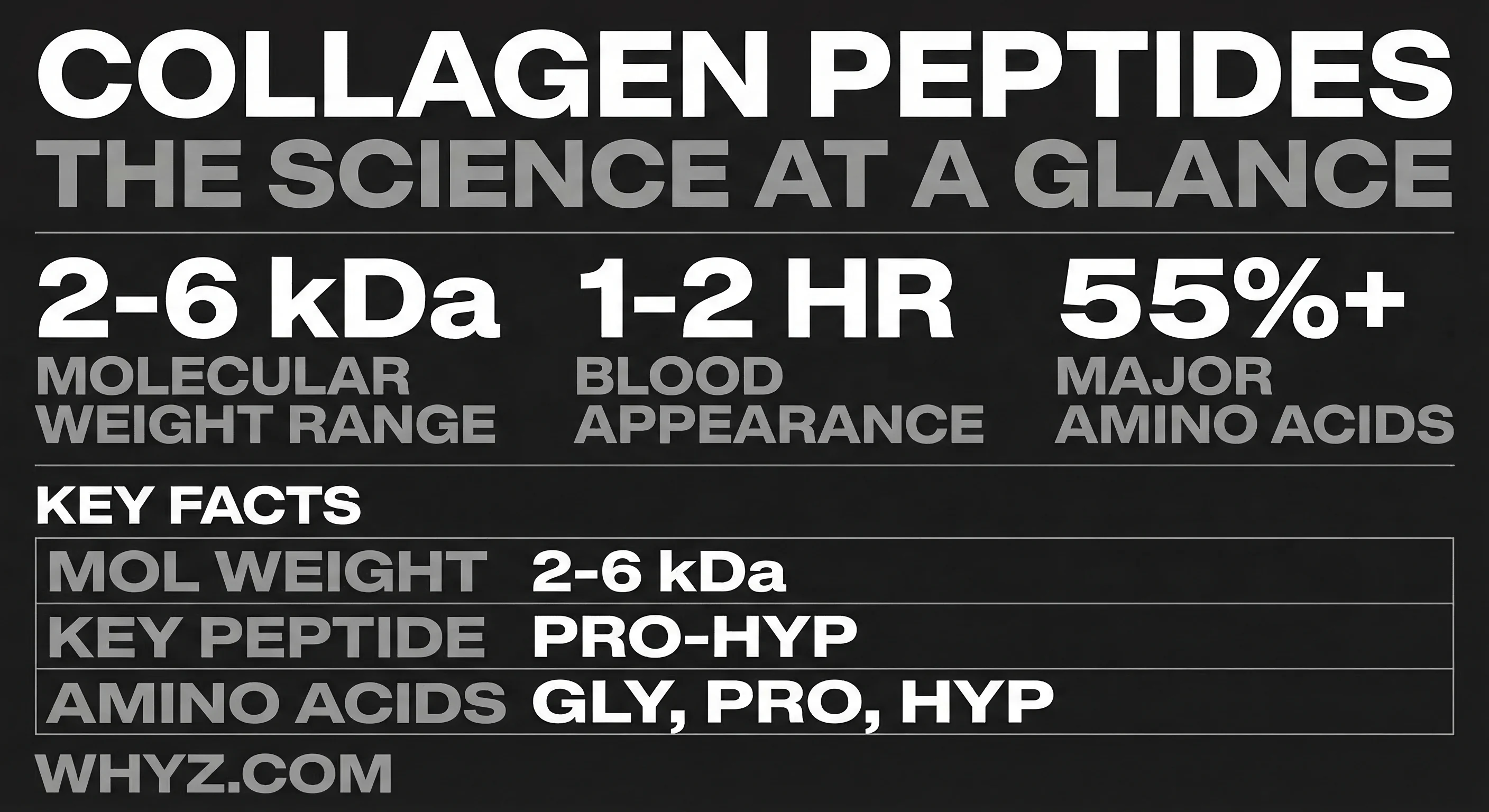
Hydrolyzed collagen peptides are produced by enzymatic hydrolysis, a controlled process that breaks native collagen’s large triple-helix molecules into smaller peptide fragments ranging from 2,000 to 6,000 Daltons. This size reduction is the defining feature of hydrolyzed collagen supplements and the primary reason they are more bioavailable than intact collagen or gelatin.
How Collagen Peptides Work
The mechanism by which ingested collagen peptides exert biological effects has been a subject of considerable debate. Two complementary pathways have emerged from the research.
Amino acid provision. Collagen has an unusual amino acid profile. Approximately one-third of its residues are glycine, and it contains high concentrations of proline (12%) and hydroxyproline (10%), amino acids that are relatively scarce in other dietary proteins. When collagen peptides are digested, they release these amino acids into circulation, providing raw material for endogenous collagen synthesis in skin, cartilage, and bone tissue.
Bioactive peptide signaling. Research has identified specific di- and tripeptides, particularly prolyl-hydroxyproline (Pro-Hyp) and hydroxyprolyl-glycine (Hyp-Gly), that survive gastrointestinal digestion intact and appear in peripheral blood within 1–2 hours of ingestion. These bioactive peptides have been shown to stimulate fibroblast proliferation and increase production of collagen, elastin, and hyaluronic acid in cell culture studies. The peptide Pro-Hyp reaches peak blood concentrations approximately 2 hours after oral administration and has been detected in skin tissue, suggesting that at least some absorbed peptides reach target organs (Skov et al., 2019).
The PepT1 transporter system in the small intestine facilitates uptake of di- and tripeptides across the intestinal epithelium. This transport mechanism is well-characterized in pharmacology and explains how certain collagen-derived peptides enter circulation without being fully broken down to individual amino acids.
It is worth noting that the degree to which circulating peptides directly stimulate tissue-level collagen synthesis in humans remains an active area of investigation. The cell culture data is encouraging, but extrapolating from in vitro fibroblast responses to whole-body outcomes requires some caution. The clinical trial evidence discussed below represents the strongest basis for practical recommendations.
What are the evidence-based benefits of collagen peptides?
How do collagen peptides improve skin health?
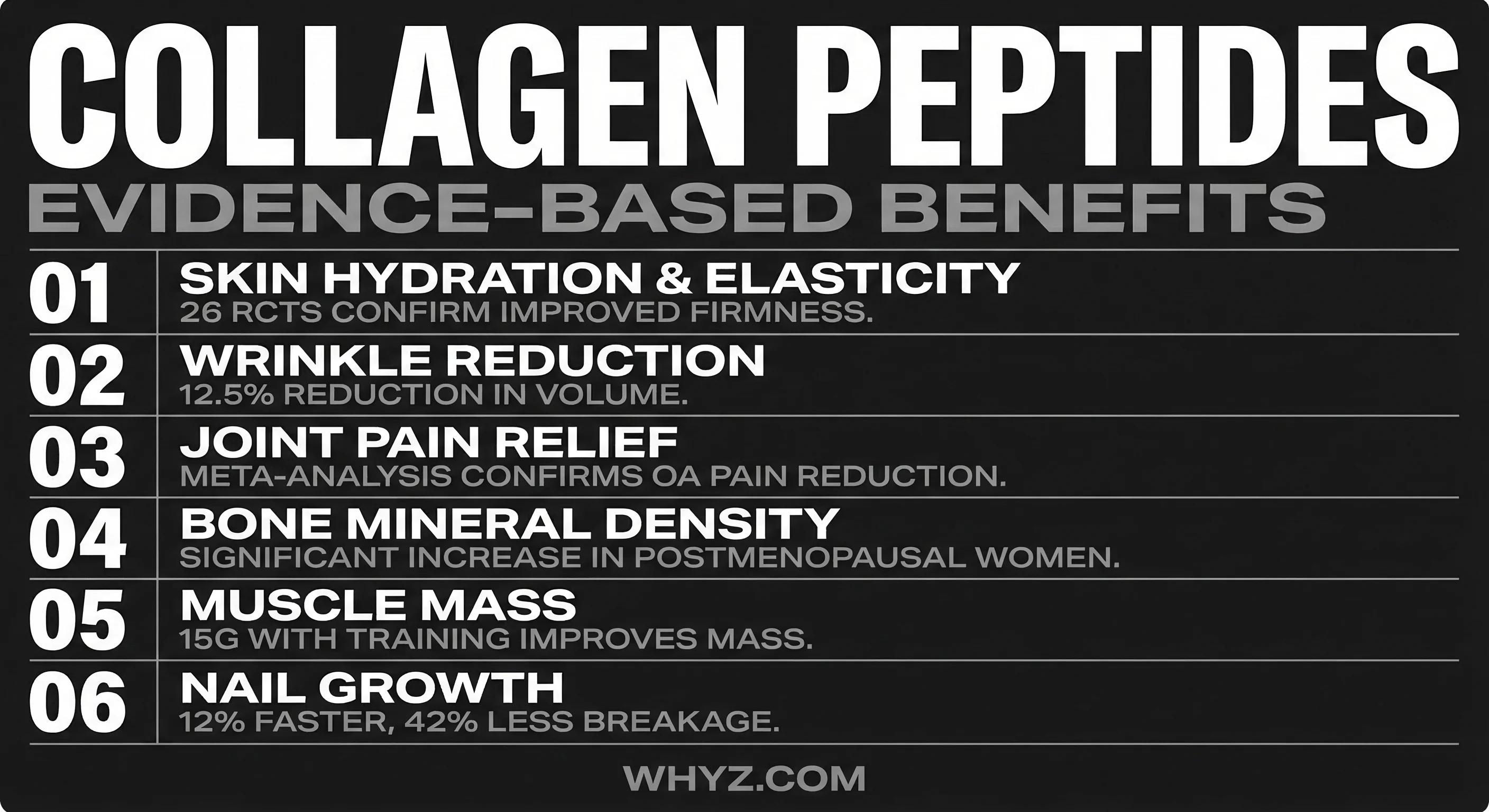
Hydrolyzed collagen peptides significantly improve skin hydration, elasticity, and wrinkle depth compared to placebo — a 2021 systematic review and meta-analysis by de Miranda et al. confirmed statistically significant improvements in all three outcomes after 90 days of supplementation, with a larger 2023 meta-analysis by Pu et al. encompassing 26 RCTs and 1,721 participants further confirming these effects regardless of collagen source [5][6]. Research shows the skin benefits are among the most robustly replicated findings in collagen research, with Proksch et al. (2014) demonstrating significant elasticity improvements at both 2.5 g and 5 g/day over just 8 weeks in a double-blind, placebo-controlled trial enrolling 69 women aged 35–55 [1].
A larger meta-analysis by Pu et al. (2023), encompassing 26 RCTs with 1,721 participants, confirmed these findings and reported that hydrolyzed collagen supplementation significantly improved skin hydration and elasticity regardless of the collagen source (bovine, marine, or porcine), though effects varied with supplementation duration (Pu et al., 2023).
At the individual trial level, Proksch et al. (2014) conducted a double-blind, placebo-controlled study in which 69 women aged 35–55 received either 2.5 g or 5 g of specific collagen peptides daily for 8 weeks. Both dosage groups showed statistically significant improvements in skin elasticity compared to placebo, with effects persisting four weeks after supplementation ended (Proksch et al., 2014).
Asserin et al. (2015) demonstrated that 10 g/day of collagen peptides for 8 weeks increased skin collagen density by 9% and reduced facial wrinkle volume by 12.5% in a placebo-controlled trial using both biophysical measurements and ex vivo skin models (Asserin et al., 2015).
How do collagen peptides support joint health?
Collagen peptides reduce joint pain in osteoarthritis — a meta-analysis by García-Coronado et al. (2019) pooled data from multiple RCTs and found significant pain reduction favoring collagen over placebo, with no significant differences in adverse event rates between groups [9]. Multiple clinical trials have examined collagen peptides for joint pain, with the strongest evidence in osteoarthritis populations.
Clark et al. (2008) conducted a 24-week randomized, double-blind, placebo-controlled trial in 147 athletes with activity-related joint pain. Participants receiving 10 g of collagen hydrolysate daily showed significant improvement in joint pain during walking, standing, carrying objects, and at rest compared to placebo (Clark et al., 2008).
A meta-analysis by García-Coronado et al. (2019) pooled data from RCTs examining collagen supplementation in osteoarthritis and found significant pain reduction favoring collagen over placebo, with no significant differences in adverse event rates between groups (García-Coronado et al., 2019).
Schauss et al. (2012) reported that BioCell Collagen (a low-molecular-weight hydrolyzed chicken sternal cartilage extract containing type II collagen, chondroitin sulfate, and hyaluronic acid) at 2 g/day for 70 days reduced joint pain and improved physical function in patients with osteoarthritis (Schauss et al., 2012).
Can collagen peptides improve bone density?
Collagen peptides at 5 g/day significantly increased bone mineral density at the femoral neck and lumbar spine in postmenopausal women over 12 months — König et al. (2018) confirmed these findings in a randomized, double-blind, placebo-controlled trial enrolling 131 women with reduced bone mineral density, along with favorable changes in bone formation biomarkers [8]. Postmenopausal bone loss is driven in part by declining collagen content in bone matrix. König et al. (2018) conducted a 12-month randomized, double-blind, placebo-controlled trial in 131 postmenopausal women with reduced bone mineral density. Participants receiving 5 g of specific collagen peptides daily showed a significant increase in bone mineral density at the femoral neck and lumbar spine, along with favorable changes in bone formation markers (König et al., 2018).
This is a single trial, and the magnitude of BMD improvement was modest. Collagen peptide supplementation for bone health should be considered adjunctive, not a replacement for calcium, vitamin D, weight-bearing exercise, or medical treatment for osteoporosis.
How do collagen peptides affect muscle mass and body composition?
Collagen peptides at 15 g/day combined with resistance training produce significantly greater gains in fat-free mass and reductions in fat mass than training with placebo — Zdzieblik et al. (2015) confirmed these outcomes in 53 elderly sarcopenic men over 12 weeks, with a follow-up study by Zdzieblik et al. (2021) replicating the findings in middle-aged untrained men [2][12]. Studies demonstrate these body composition benefits extend to women: Jendricke et al. (2019) showed 15 g/day of specific collagen peptides during resistance training improved body composition and increased grip strength in premenopausal women [13]. Zdzieblik et al. (2015) randomized 53 elderly men with sarcopenia to receive 15 g of collagen peptides or placebo daily during a 12-week guided resistance training program. The collagen group gained significantly more fat-free mass and lost more fat mass than the placebo group, both of which were also training (Zdzieblik et al., 2015).
A follow-up study in middle-aged untrained men confirmed these results: 15 g/day of collagen peptides combined with resistance training led to significantly greater increases in fat-free mass and hand grip strength compared to placebo over 12 weeks (Zdzieblik et al., 2021).
Jendricke et al. (2019) extended these findings to premenopausal women, showing that 15 g of specific collagen peptides daily during resistance training improved body composition and increased hand grip strength (Jendricke et al., 2019).
The muscle mass evidence is real but comes primarily from one research group (Zdzieblik, König, Jendricke, all associated with the University of Freiburg). Independent replication from other labs would strengthen confidence in these findings.
Does collagen supplementation improve nail health?
Collagen peptides at 2.5 g/day increased nail growth rate by 12% and reduced nail breakage by 42% over 24 weeks — Hexsel et al. (2017) reported these outcomes in a study where 80% of participants also noted visible nail appearance improvement [14]. Hexsel et al. (2017) conducted a study in which 25 participants took 2.5 g of collagen peptides daily for 24 weeks. Nail growth rate increased by 12%, nail breakage frequency decreased by 42%, and 80% of participants agreed that their nails appeared improved (Hexsel et al., 2017). This was a small, single-arm study without a placebo group, so evidence quality is limited.
Collagen Dosage
Research-supported dosing ranges vary by health goal:
- Skin health: 2.5–10 g/day for 8–12 weeks minimum
- Joint support: 10 g/day for 12–24 weeks
- Bone density: 5 g/day for 12 months (based on König et al.)
- Muscle mass (combined with resistance training): 15 g/day for 12 weeks
- Nail health: 2.5 g/day for 24 weeks
There is no established loading protocol for collagen. Consistent daily intake over several weeks is the standard approach.
For detailed dosing information including timing, vitamin C co-intake, and population-specific recommendations, see the full dosage guide.
Is Collagen Safe?
Collagen peptides have a favorable safety profile. The FDA classifies gelatin (from which collagen peptides are derived) as Generally Recognized as Safe (GRAS), and both the World Health Organization and European regulatory bodies have reviewed hydrolyzed collagen favorably.
The most commonly reported side effects are mild gastrointestinal symptoms: bloating, a sense of fullness, and occasional diarrhea or constipation. These typically resolve within the first week or by reducing the dose and gradually increasing it.
Allergenic considerations. Collagen supplements are animal-derived, so source-specific allergies are a legitimate concern. Individuals allergic to fish should avoid marine collagen. Those with bovine protein allergies should avoid bovine-sourced products. Rare cases of anaphylaxis to fish-derived collagen have been reported in sensitized individuals.
Populations requiring caution. Individuals with kidney disease should consult their physician before adding collagen, as it contributes to total daily protein intake. Safety data during pregnancy and breastfeeding is insufficient to make recommendations. For a comprehensive safety overview, see the side effects page.
Forms of Collagen
Hydrolyzed collagen peptides are the most studied and most bioavailable form. The hydrolysis process breaks collagen into peptides of 2–6 kDa, improving intestinal absorption compared to gelatin or undenatured collagen.
Gelatin is partially hydrolyzed collagen. It dissolves in hot liquid and gels upon cooling. While it provides the same amino acids as hydrolyzed collagen, its larger molecular size means somewhat lower bioavailability.
Undenatured type II collagen (UC-II) is a distinct product used at very low doses (40 mg/day) for joint health through an immune-modulating mechanism rather than the amino acid provision mechanism of hydrolyzed peptides. It should not be confused with high-dose hydrolyzed collagen.
Collagen by Source
| Source | Primary Types | Common Uses |
|---|---|---|
| Bovine (cow hide, bone) | Types I and III | Skin, bone, general connective tissue |
| Marine (fish skin, scales) | Type I | Skin hydration, potentially faster absorption |
| Chicken (sternal cartilage) | Type II | Joint and cartilage support |
| Eggshell membrane | Types I, V, X | Joint support (less studied) |
Marine collagen peptides tend to have smaller fragment sizes than bovine, which may contribute to faster absorption, though head-to-head bioavailability trials comparing the two sources in matched doses are limited.
Collagen for Special Populations
Adults over 50. Age-related collagen decline accelerates after 50, affecting skin integrity, joint comfort, and bone density. The König et al. (2018) bone density trial and the Zdzieblik et al. (2015) sarcopenia trial specifically enrolled older adults and demonstrated benefits.
Athletes and active individuals. The Clark et al. (2008) athlete joint pain study and Clifford et al. (2019) muscle damage recovery trial (Clifford et al., 2019) provide evidence for collagen in sports recovery contexts. Collagen does not replace whey or other complete proteins for muscle protein synthesis (it lacks leucine and other essential amino acids) but may complement a protein-rich diet for connective tissue support.
Postmenopausal women. Bone density preservation and skin elasticity maintenance are two evidence-supported applications for this population.
How to Take Collagen
Hydrolyzed collagen peptides dissolve easily in both hot and cold liquids. They are largely flavorless in unflavored powder form, making them simple to add to coffee, smoothies, oatmeal, or water.
Vitamin C co-intake. Vitamin C is a required cofactor for collagen synthesis (specifically, it enables the hydroxylation of proline and lysine residues). While collagen supplements do not require simultaneous vitamin C ingestion for absorption, ensuring adequate daily vitamin C intake (at least 75–90 mg from food or supplements) supports the body’s ability to use absorbed collagen peptides for tissue repair.
Timing. No strong evidence favors one time of day over another. Consistency matters more than timing. Some practitioners recommend taking collagen 30–60 minutes before exercise to maximize delivery to connective tissues, based on the Shaw et al. (2017) gelatin and vitamin C study, but this was conducted with gelatin rather than hydrolyzed peptides.
Storage. Store collagen powder in a cool, dry place. Properly stored hydrolyzed collagen has a shelf life of two or more years.
Frequently Asked Questions
Does collagen survive digestion?
Collagen is partially digested into individual amino acids, but specific di- and tripeptides, particularly prolyl-hydroxyproline (Pro-Hyp), survive intact through the GI tract and appear in blood plasma within 1–2 hours. These intact peptides are believed to exert biological signaling effects beyond simple amino acid provision.
How long does it take to see results from collagen?
Most clinical trials report improvements in skin hydration and elasticity at 4–8 weeks, with full effects at 8–12 weeks. Joint pain reduction typically requires 12–24 weeks of consistent supplementation at 10 g/day. Do not expect overnight changes.
Is marine collagen better than bovine?
Marine collagen tends to have smaller peptide fragment sizes, which may enhance absorption speed. However, no large head-to-head trials have conclusively demonstrated that marine collagen produces superior clinical outcomes compared to bovine collagen at equivalent doses. Both are effective sources of type I collagen.
Can you get enough collagen from food?
Bone broth, chicken skin, fish skin, and organ meats contain collagen, but the collagen in whole foods is not hydrolyzed and has lower bioavailability than supplemental peptides. Achieving the 5–15 g doses used in clinical trials through diet alone would require consuming substantial quantities of these specific foods daily.
Is collagen vegan-friendly?
No. All collagen is animal-derived. No plant produces collagen. Products marketed as “vegan collagen” typically contain amino acid blends or collagen-boosting nutrients (vitamin C, zinc, silica) rather than actual collagen protein. Recombinant collagen produced via bioengineered yeast or bacteria exists but is not yet widely available as a consumer supplement.
Does collagen interact with medications?
No significant drug interactions have been documented for hydrolyzed collagen peptides. However, individuals on blood-thinning medications should note that some marine collagen products may also contain fish oil compounds. Always check the full ingredient list.
Why Choose WHYZ
WHYZ Collagen Peptides is a single-ingredient product with no fillers, no artificial additives, and no proprietary blends. It is sourced from grass-fed, pasture-raised bovine hides and hydrolyzed to small peptides (≤5 kDa) for optimal absorption. Every batch is third-party tested for purity, potency, and heavy metals.
- Grass-fed bovine source — pasture-raised for cleaner sourcing
- Hydrolyzed to peptides — pre-digested for superior bioavailability vs. intact collagen
- No blends, no fillers — just collagen peptides, nothing else
- Third-party tested — Certificate of Analysis including heavy metals testing available for every batch
Related Ingredients
- NMN — Cellular energy & DNA repair; both target healthy aging from different angles
- Creatine Monohydrate — Performance & recovery; collagen + creatine is a popular joint+muscle stack
Shop WHYZ Collagen Peptides
Ready to try it? WHYZ Bovine Collagen Peptides Powder is available with free Prime shipping.
Source in Bulk
Looking to source bulk collagen peptides powder for manufacturing or formulation? WHYZ supplies wholesale quantities with COA documentation and free evaluation samples. Request a quote →
References
-
Proksch E, Segger D, Degwert J, Hartmann M, Lambers H, Stachelscheid H. Oral supplementation of specific collagen peptides has beneficial effects on human skin physiology: a double-blind, placebo-controlled study. Skin Pharmacol Physiol. 2014;27(1):47-55. PMID: 23949208
-
Zdzieblik D, Oesser S, Baumstark MW, Gollhofer A, König D. Collagen peptide supplementation in combination with resistance training improves body composition and increases muscle strength in elderly sarcopenic men. Br J Nutr. 2015;114(8):1237-1245. PMID: 26353786
-
Clark KL, Sebastianelli W, Flechsenhar KR, et al. 24-Week study on the use of collagen hydrolysate as a dietary supplement in athletes with activity-related joint pain. Curr Med Res Opin. 2008;24(5):1485-1496. PMID: 18416885
-
Bolke L, Schlippe G, Gerß J, Voss W. A collagen supplement improves skin hydration, elasticity, roughness, and density: results of a randomized, placebo-controlled, blind study. Nutrients. 2019;11(10):2494. PMID: 31627309
-
de Miranda RB, Weimer P, Rossi RC. Effects of hydrolyzed collagen supplementation on skin aging: a systematic review and meta-analysis. Int J Dermatol. 2021;60(12):1449-1461. PMID: 33742704
-
Pu SY, Huang YL, Pu CM, Kang YN, Hoang KD, Chen KH, Chen C. Effects of oral collagen for skin anti-aging: a systematic review and meta-analysis. Nutrients. 2023;15(9):2080. PMID: 37432180
-
Asserin J, Lati E, Shioya T, Prawitt J. The effect of oral collagen peptide supplementation on skin moisture and the dermal collagen network: evidence from an ex vivo model and randomized, placebo-controlled clinical trials. J Cosmet Dermatol. 2015;14(4):291-301. PMID: 26362110
-
König D, Oesser S, Scharla S, Zdzieblik D, Gollhofer A. Specific collagen peptides improve bone mineral density and bone markers in postmenopausal women — a randomized controlled study. Nutrients. 2018;10(1):97. PMID: 29337906
-
García-Coronado JM, Martínez-Olvera L, Elizondo-Omaña RE, et al. Effect of collagen supplementation on osteoarthritis symptoms: a meta-analysis of randomized placebo-controlled trials. Int Orthop. 2019;43(3):531-538. PMID: 30368550
-
Clifford T, Ventress M, Allerton DM, et al. The effects of collagen peptides on muscle damage, inflammation and bone turnover following exercise: a randomized, controlled trial. Amino Acids. 2019;51(4):691-704. PMID: 30783776
-
Schauss AG, Stenehjem J, Park J, Endres JR, Clewell A. Effect of the novel low molecular weight hydrolyzed chicken sternal cartilage extract, BioCell Collagen, on improving osteoarthritis-related symptoms. J Agric Food Chem. 2012;60(16):4096-4101. PMID: 22486722
-
Zdzieblik D, Jendricke P, Oesser S, Gollhofer A, König D. The influence of specific bioactive collagen peptides on body composition and muscle strength in middle-aged, untrained men. Int J Environ Res Public Health. 2021;18(9):4837. PMID: 33946565
-
Jendricke P, Centner C, Zdzieblik D, Gollhofer A, König D. Specific collagen peptides in combination with resistance training improve body composition and regional muscle strength in premenopausal women. Nutrients. 2019;11(4):892. PMID: 31010031
-
Hexsel D, Zague V, Schunck M, Siber C, Strunz FC, Oesser S. Oral supplementation with specific bioactive collagen peptides improves nail growth and reduces symptoms of brittle nails. J Cosmet Dermatol. 2017;16(4):520-526. PMID: 28786550
-
Skov K, Oxfeldt M, Thøgersen R, Hansen M, Bertram HC. Enzymatic hydrolysis of a collagen hydrolysate enhances postprandial absorption rate — a randomized controlled trial. Nutrients. 2019;11(5):1064. PMID: 31086034
-
Bello AE, Oesser S. Collagen hydrolysate for the treatment of osteoarthritis and other joint disorders: a review of the literature. Curr Med Res Opin. 2006;22(11):2221-2232. PMID: 17076983
-
Moskowitz RW. Role of collagen hydrolysate in bone and joint disease. Semin Arthritis Rheum. 2000;30(2):87-99. PMID: 11071580