
Quick Facts
| Property | Details |
|---|---|
| What it is | Nicotinamide mononucleotide — direct precursor to NAD+, the coenzyme central to cellular energy and DNA repair |
| Primary Benefits | Cellular energy, NAD+ restoration, DNA repair support, longevity markers |
| Standard Dosage | 250–600 mg daily |
| Best Time to Take | Morning, on an empty stomach |
| Form | Powder |
| Evidence Grade | B — Promising (multiple human RCTs confirm NAD+ elevation; long-term longevity data still emerging) |
| Key Studies | Yi et al. 2023 — dose-dependent RCT (PMID: 36482258); Yoshino et al. 2021 — insulin sensitivity (PMID: 33888596) |
Watch: NMN in 60 Seconds
What Is NMN?
Your cells run on a molecule called NAD+ (nicotinamide adenine dinucleotide). It is involved in over 500 enzymatic reactions, from converting food into energy to repairing damaged DNA. NAD+ is not optional; without it, you would die in about 30 seconds. The problem is that NAD+ levels drop steadily with age. By the time you hit 60, your NAD+ levels may be half of what they were at 20 (Imai & Guarente, 2014).
Nicotinamide mononucleotide (NMN) is a naturally occurring nucleotide and a direct precursor to NAD+. When you take NMN, your body converts it into NAD+ through a single enzymatic step catalyzed by NMNAT (nicotinamide mononucleotide adenylyltransferase) enzymes. NMN is found in trace amounts in foods like broccoli, edamame, avocado, and cabbage, but the quantities are far too small to meaningfully impact NAD+ levels. A serving of broccoli contains roughly 0.25-1.12 mg of NMN. You would need to eat hundreds of kilograms of broccoli daily to match a single supplement dose.
NMN supplementation gained mainstream attention largely through the work of David Sinclair, a Harvard geneticist whose mouse studies demonstrated that NMN could reverse markers of aging in older animals (Mills et al., 2016). Those mouse results were dramatic: improved energy metabolism, enhanced insulin sensitivity, better eye function, and suppressed age-related weight gain over 12 months of continuous administration with no observed toxicity. The question that followed was whether any of that would hold up in humans.
Since 2020, a series of human clinical trials have started to answer that question. The evidence is promising but still early. NMN reliably raises NAD+ levels in people. Some trials show improvements in specific biomarkers like insulin sensitivity and arterial stiffness. But the sample sizes are small, the study durations are short, and the really big questions about longevity and disease prevention remain unanswered. NMN earns a Grade B evidence rating: several human RCTs exist with consistent direction, but the data is not yet strong enough for confident clinical claims.
How NMN Works
NAD+ is synthesized through three main pathways in the body. The dominant route in mammals is the salvage pathway, which recycles nicotinamide (a form of vitamin B3) back into NAD+. Here is how it works:
- The enzyme NAMPT (nicotinamide phosphoribosyltransferase) converts nicotinamide into NMN. This is the rate-limiting step, meaning it is the slowest part of the chain and determines the overall pace of NAD+ production.
- NMNAT enzymes then convert NMN into NAD+ by adding an adenylyl group.
NAMPT activity declines with age, which is a major reason NAD+ levels fall as you get older (Imai & Guarente, 2014). By supplementing with NMN directly, you bypass the NAMPT bottleneck and feed the second step of the pathway.
Once NAD+ is produced, it serves as a substrate for three major classes of enzymes:
- Sirtuins (SIRT1-7): A family of deacetylases involved in DNA repair, gene silencing, mitochondrial biogenesis, and metabolic regulation. SIRT1 and SIRT3 are the most studied in the context of aging. They cannot function without NAD+.
- PARPs (poly-ADP-ribose polymerases): Enzymes that detect and repair DNA damage. PARP1 consumes large quantities of NAD+ during its repair activity, and this consumption increases with age as DNA damage accumulates.
- CD38: An ectoenzyme that degrades NAD+. CD38 expression increases with age and chronic inflammation, and some researchers believe it is the single largest driver of age-related NAD+ decline.
The net effect is a supply-and-demand squeeze. Your cells need more NAD+ as you age (more DNA damage, more repair needed) while producing less of it (declining NAMPT, rising CD38). NMN supplementation aims to restore the supply side of that equation.
Regarding absorption: NMN was long assumed to require conversion to nicotinamide riboside (NR) before crossing cell membranes. However, research has identified a dedicated NMN transporter called Slc12a8, expressed primarily in the small intestine, which can transport intact NMN directly into cells (Grozio et al., 2019). Human pharmacokinetic data shows that oral NMN is rapidly absorbed, with plasma metabolite levels rising within 30-60 minutes of ingestion (Irie et al., 2020).
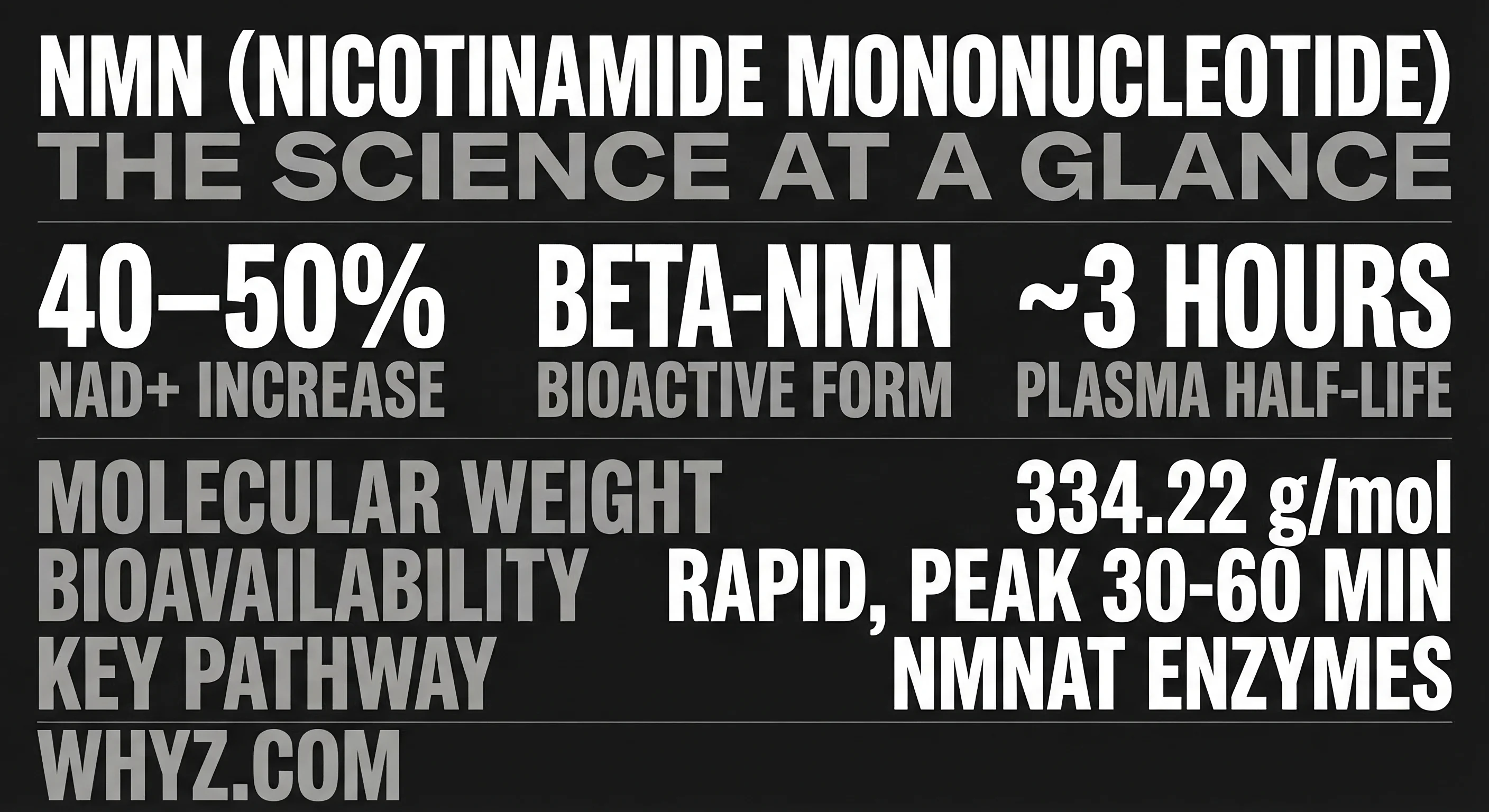
What are the evidence-based benefits of NMN supplementation?
How effectively does NMN restore NAD+ levels?
NMN supplementation significantly raises circulating NAD+ levels across a dose range of 250–900 mg/day — a multicenter RCT by Yi et al. (2023) in 80 middle-aged adults found statistically significant blood NAD+ increases in all NMN-treated groups (300, 600, and 900 mg/day) at both 30 and 60 days compared to placebo, with all comparisons reaching p ≤ 0.001. Research shows NAD+ restoration is the most robustly supported benefit of NMN supplementation. A multicenter, dose-dependent RCT with 80 middle-aged adults found that all NMN-treated groups (300, 600, and 900 mg/day) showed statistically significant increases in blood NAD+ at both 30 and 60 days compared to placebo (all p ≤ 0.001). The 600 mg and 900 mg groups achieved the highest NAD+ concentrations (Yi et al., 2023). A separate 12-week trial confirmed that 250 mg/day of NMN significantly increased whole blood NAD+ levels in healthy adults (Okabe et al., 2022). The MIB-626 trial at Harvard demonstrated dose-related NAD+ increases with 1,000 mg once or twice daily over 14 days (Pencina et al., 2022).
How does NMN affect insulin sensitivity?
NMN at 250 mg/day increased skeletal muscle insulin sensitivity as measured by hyperinsulinemic-euglycemic clamp — Yoshino et al. (2021) confirmed this finding in a 10-week RCT at Washington University in 25 postmenopausal women with prediabetes, with NMN also significantly increasing phosphorylation of AKT and mTOR in skeletal muscle, published in Science [reference]. The most clinically significant human finding to date comes from a Washington University study published in Science. Yoshino et al. (2021) conducted a 10-week RCT in 25 postmenopausal women with prediabetes who were overweight or obese. NMN supplementation (250 mg/day) increased muscle insulin sensitivity as measured by hyperinsulinemic-euglycemic clamp, considered the gold standard test. The NMN group also showed increased phosphorylation of AKT and mTOR in skeletal muscle, indicating enhanced insulin signaling (Yoshino et al., 2021). This is notable because it is one of the few NMN trials that measured a hard clinical endpoint rather than just biomarkers.
Can NMN improve exercise performance?
NMN supplementation at 600–1,200 mg/day improved aerobic capacity markers in a six-week RCT in 48 amateur runners — Liao et al. (2021) found that medium and high dose groups showed greater increases in oxygen uptake at the ventilatory thresholds compared to placebo, driven by improved skeletal muscle O2 utilization rather than cardiovascular changes. A six-week RCT in 48 amateur runners found that NMN supplementation at 600 and 1,200 mg/day improved aerobic capacity. Specifically, the medium and high dose groups showed greater increases in oxygen uptake at the ventilatory thresholds compared to placebo. The effect appeared to be driven by improved O2 utilization in skeletal muscle rather than cardiovascular changes. VO2max itself did not significantly change, but submaximal performance markers did (Liao et al., 2021).
Cardiovascular Markers
A 12-week trial found that NMN supplementation at 250 mg/day showed a trend toward reduced pulse wave velocity (a measure of arterial stiffness) compared to placebo, though the difference did not reach statistical significance. The study did confirm that long-term NMN intake safely elevated NAD+ metabolism (Katayoshi et al., 2023). The MIB-626 study at Brigham and Women’s Hospital found more robust cardiovascular signals: 28 days of NMN (1,000 mg twice daily) significantly reduced diastolic blood pressure, total cholesterol, and LDL cholesterol compared to placebo (Pencina et al., 2023).
How does NMN affect physical function in older adults?
NMN at 250 mg/day for 12 weeks improved lower limb function in older adults — a Japanese RCT by Kim et al. (2022) in 108 older adults confirmed improvement on the 5-times sit-to-stand test, with the afternoon dosing group achieving an effect size of d = 0.72, along with significant reductions in reported drowsiness. A Japanese RCT with 108 older adults found that NMN supplementation (250 mg/day for 12 weeks) improved lower limb function as measured by the 5-times sit-to-stand test, with the largest effect seen in the afternoon dosing group (effect size d = 0.72). The same group showed reduced drowsiness (Kim et al., 2022). The multicenter Yi et al. trial also found significantly increased six-minute walking distances in all NMN-treated groups compared to placebo (Yi et al., 2023).
Body Weight and Metabolic Health
The MIB-626 physiologic study found that 28 days of NMN supplementation resulted in a significant reduction in body weight (-1.9 kg difference vs. placebo, p = .008). Non-HDL cholesterol and LDL cholesterol also decreased significantly (Pencina et al., 2023). However, other trials have not replicated these weight loss findings, and the Yi et al. meta-analysis found no significant differences in fasting glucose, triglycerides, or cholesterol with NMN supplementation at lower doses. The body weight finding is intriguing but needs confirmation.
NMN Dosage
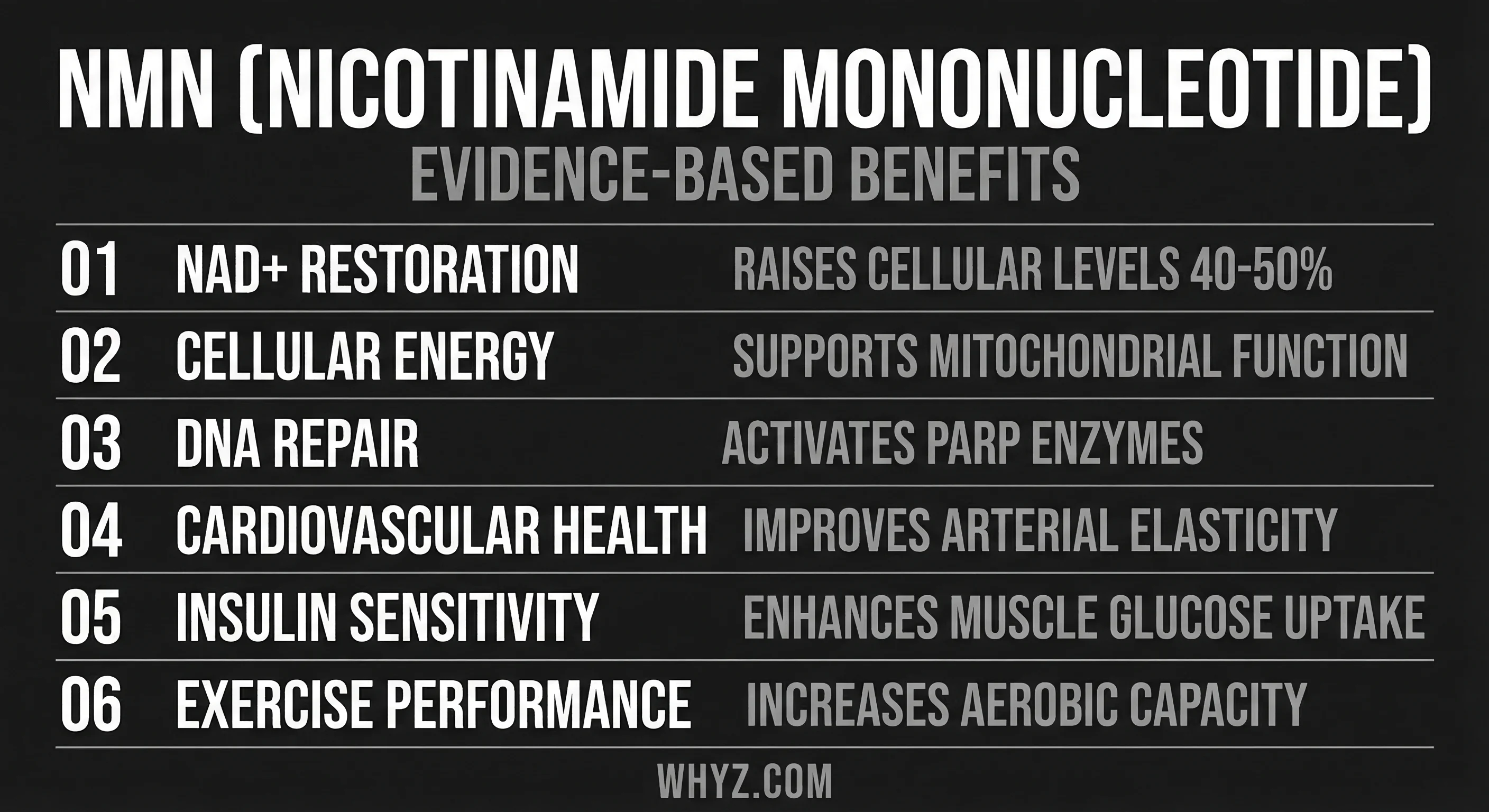
Standard Dose: 250-600 mg Per Day
The dose-dependent Yi et al. trial provides the clearest dosing guidance available. Blood NAD+ concentrations and physical performance improvements were highest at 600 mg/day, with 300 mg/day also showing significant effects (Yi et al., 2023). For most adults interested in general NAD+ support, 250-500 mg daily is a reasonable starting point.
Higher Doses
The Liao et al. runner trial used doses up to 1,200 mg/day and found dose-dependent improvements in aerobic parameters (Liao et al., 2021). The MIB-626 trials tested 1,000 mg once and twice daily with good tolerability (Pencina et al., 2022). Doses above 600 mg may offer additional benefits for specific outcomes, but the evidence for a clear advantage over 600 mg is limited.
Timing
Morning dosing is commonly recommended based on the circadian biology of NAD+ metabolism, though this has not been rigorously tested in a head-to-head trial. The Kim et al. trial compared morning vs. afternoon dosing and found that afternoon dosing produced larger effect sizes for physical function outcomes (Kim et al., 2022). Take NMN at whatever time you will consistently remember it.
How Long Until Results?
Blood NAD+ levels rise within days of starting NMN. The Yi et al. trial measured significant increases at the 30-day mark, with continued elevation at 60 days (Yi et al., 2023). Subjective benefits like improved energy or sleep quality, if they occur, typically take 2-4 weeks based on user reports, though these are not well-documented in controlled trials.
Is NMN Safe?
Short-Term Safety
The available human trial data consistently shows that NMN is well-tolerated at doses up to 1,250 mg/day for periods up to 12 weeks. The Phase 1 safety study by Irie et al. (2020) found no significant clinical symptoms or laboratory abnormalities after single oral doses of 100, 250, and 500 mg in healthy men (Irie et al., 2020). The Okabe et al. 12-week trial at 250 mg/day found no abnormalities in physiological or laboratory tests (Okabe et al., 2022). The Yi et al. 60-day trial at up to 900 mg/day reported no safety issues (Yi et al., 2023).
Known Side Effects
Some users report mild digestive discomfort (nausea, gas, abdominal discomfort), headaches, or transient insomnia, particularly at higher doses. These effects are generally mild and tend to resolve within the first week. They are consistent with side effects reported for other NAD+ precursors like nicotinamide riboside (NR).
Long-Term Safety
This is the honest gap in the evidence. The longest published human trial is 12 weeks. No long-term safety data (6 months or longer) exists in humans. The 12-month mouse study by Mills et al. showed no toxicity with chronic NMN administration (Mills et al., 2016), which is reassuring but not definitive for humans. If you are considering long-term use, periodic check-ins with your doctor are reasonable.
Special Populations to Exercise Caution
- Cancer patients: NAD+ supports cellular energy production and DNA repair. Some researchers have raised theoretical concerns that boosting NAD+ could potentially support cancer cell metabolism. No human evidence directly links NMN to cancer promotion, but this remains an area of active investigation. Cancer patients should consult their oncologist before supplementing.
- Pregnancy and lactation: No safety data exists. Avoidance is the prudent default.
- Liver or kidney disease: Metabolism and excretion may be altered. Consult your physician.
Regulatory Status
The FDA briefly restricted NMN as a dietary supplement in 2022, classifying it as an investigational new drug due to Metro International Biotech’s clinical trials. This decision was challenged by the Natural Products Association and subsequently rescinded for the beta-NMN form. NMN supplements are currently available for sale in the United States.
Forms of NMN
Beta-NMN vs. Alpha-NMN
Only beta-NMN (β-NMN) is the biologically active form. Chemical synthesis can produce both alpha and beta isomers, requiring additional purification. Enzymatic synthesis and fermentation-based production methods tend to yield cleaner beta-NMN profiles. When purchasing NMN, look for products that specify β-NMN and provide third-party purity testing.
Powder vs. Capsules
NMN is available as bulk powder and in capsule form. The powder dissolves readily in water and has a mildly bitter taste. Capsules offer convenience and consistent dosing. There is no evidence that one form is more bioavailable than the other for standard oral delivery.
Sublingual and Liposomal Forms
Some brands market sublingual tablets or liposomal NMN, claiming superior absorption. The evidence for these claims is limited. Standard oral NMN is efficiently absorbed through the gut, and the pharmacokinetic studies that demonstrate NAD+ elevation have used standard oral delivery (Irie et al., 2020; Okabe et al., 2022).
NMN vs. NR (Nicotinamide Riboside)
NR is the other widely marketed NAD+ precursor. Both ultimately produce NAD+ through related pathways. The key differences:
| Feature | NMN | NR |
|---|---|---|
| Molecular step to NAD+ | One step (NMN → NAD+) | Two steps (NR → NMN → NAD+) |
| Molecular weight | 334.22 g/mol | 255.25 g/mol |
| Clinical trials | Growing (10+ RCTs) | More established (15+ RCTs) |
| Typical dose | 250-600 mg/day | 300-1,000 mg/day |
| Cost | Generally higher | Generally lower |
| Key human trial | Yoshino et al. 2021 (Science) | Martens et al. 2018 (Nature Comm) |
NR has a longer clinical track record and more published human data. NMN is a more direct precursor (one enzymatic step closer to NAD+). There is no definitive evidence that one is superior to the other for raising NAD+ levels in humans. The choice often comes down to price, availability, and personal response.
NMN for Special Populations
Adults Over 50
The age-related decline in NAD+ makes older adults a primary target population for NMN research. The Kim et al. trial specifically enrolled older Japanese adults (65+) and found benefits for lower limb function and reduced drowsiness (Kim et al., 2022). The Yi et al. trial enrolled healthy middle-aged adults (40-65) and found walking endurance benefits (Yi et al., 2023). This is the population with the strongest theoretical rationale for supplementation.
Athletes and Active Adults
The Liao et al. runner trial showed improved aerobic efficiency at higher NMN doses, particularly at the ventilatory thresholds (Liao et al., 2021). Exercise itself increases NAMPT expression and NAD+ turnover, so active individuals may benefit from supplementation to support recovery. However, the evidence base for athletic performance enhancement is limited to a single trial.
Metabolically At-Risk Adults
The Yoshino et al. Science study in prediabetic women remains the strongest clinical evidence for metabolic benefits (Yoshino et al., 2021). Individuals with insulin resistance or metabolic syndrome may represent a population where NMN’s effects are most clinically meaningful, though this needs replication in larger trials.
How to Take NMN
NMN powder dissolves quickly in water at room temperature. It has a mildly bitter, slightly acidic taste that most people find manageable. Mixing it into a small glass of water or juice works well. Capsules eliminate the taste issue entirely.
Store NMN in a cool, dry place away from direct sunlight. Some manufacturers recommend refrigeration to maintain stability, though NMN is reasonably stable at room temperature in sealed containers. Avoid leaving the container open for extended periods, as NMN can absorb moisture.
NMN is commonly stacked with:
- Resveratrol: Based on Sinclair’s research suggesting synergy between NAD+ elevation and sirtuin activation. Limited human evidence for the combination.
- TMG (trimethylglycine): Sometimes added as a methyl donor to offset potential methylation demands from NAD+ metabolism. This is theoretical and not supported by clinical trials.
There is no need to cycle NMN supplementation. Continuous daily use is the protocol used in all published trials.
Frequently Asked Questions
Does NMN actually work, or is it just hype?
NMN reliably raises NAD+ levels in humans. That is well-established across multiple trials. Whether raising NAD+ translates into meaningful clinical benefits for healthy people is less clear. The insulin sensitivity finding from the Yoshino et al. Science study and the physical performance data from several trials are encouraging. But the anti-aging narrative has gotten ahead of the evidence. NMN is not proven to extend human lifespan.
Is David Sinclair a reliable source on NMN?
Sinclair’s laboratory work on NAD+ and aging is published in top-tier journals and is scientifically sound. However, he has financial interests in NMN-related companies (including Metro International Biotech) and has been criticized for making public statements that extrapolate far beyond published data. His personal NMN protocol (1,000 mg/day) is not a clinical recommendation. Use the peer-reviewed trial data, not any individual researcher’s personal regimen, to guide your decisions.
How is NMN different from niacin (vitamin B3)?
Niacin (nicotinic acid) and nicotinamide are forms of vitamin B3 that can also serve as NAD+ precursors. However, niacin causes flushing (uncomfortable skin reddening and warmth) at doses needed to significantly raise NAD+. Nicotinamide can inhibit sirtuins at high doses. NMN bypasses both of these issues by entering the NAD+ pathway at a later stage.
Can I get enough NMN from food?
Not practically. The highest food sources of NMN (edamame, broccoli, avocado) contain less than 2 mg per serving. A typical supplement dose of 250-500 mg would require eating implausible quantities of these foods daily.
Should I take NMN with resveratrol?
Some biohackers follow Sinclair’s protocol of combining NMN with resveratrol. The rationale is that resveratrol activates SIRT1, while NMN provides the NAD+ that SIRT1 requires as a substrate. This combination has shown synergistic effects in some preclinical models. However, no human RCT has tested NMN + resveratrol against NMN alone, so the added benefit in humans remains speculative.
Is NMN legal in the US?
Yes. After a brief period of regulatory uncertainty in 2022-2023 when the FDA classified NMN as an investigational new drug, the determination was challenged and the beta-NMN form is currently sold as a dietary supplement in the United States.
Why Choose WHYZ
WHYZ NMN is a single-ingredient product with no fillers, no artificial additives, and no proprietary blends. It contains pure beta-NMN — the stable, bioavailable form — with no added resveratrol blends or “longevity stacks” that obscure what you’re actually taking. Every batch is third-party tested for purity and potency.
- Pure beta-NMN — no resveratrol blends or proprietary “anti-aging” matrices
- Third-party tested — Certificate of Analysis available for every batch, including purity and absence of contaminants
- Transparent labeling — what’s on the label is what’s in the container
- No filler ingredients — no maltodextrin, no microcrystalline cellulose beyond capsule needs
Related Ingredients
- Collagen Peptides — Longevity & skin health companion; both support healthy aging
- Tongkat Ali — Vitality & hormonal health; complementary performance-oriented stack
Related Guides
- NMN vs NR: Which NAD+ Precursor Is Better?: A detailed comparison of NMN and nicotinamide riboside — mechanisms, clinical evidence, dosing, and cost.
References
-
Imai S, Guarente L. NAD+ and sirtuins in aging and disease. Trends Cell Biol. 2014;24(8):464-471. PMID: 24786309
-
Mills KF, Yoshida S, Stein LR, et al. Long-term administration of nicotinamide mononucleotide mitigates age-associated physiological decline in mice. Cell Metab. 2016;24(6):795-806. PMID: 28068222
-
Irie J, Inagaki E, Fujita M, et al. Effect of oral administration of nicotinamide mononucleotide on clinical parameters and nicotinamide metabolite levels in healthy Japanese men. Endocr J. 2020;67(2):153-160. PMID: 31685720
-
Yoshino M, Yoshino J, Kayser BD, et al. Nicotinamide mononucleotide increases muscle insulin sensitivity in prediabetic women. Science. 2021;372(6547):1224-1229. PMID: 33888596
-
Liao B, Zhao Y, Wang D, Zhang X, Hao X, Hu M. Nicotinamide mononucleotide supplementation enhances aerobic capacity in amateur runners: a randomized, double-blind study. J Int Soc Sports Nutr. 2021;18(1):54. PMID: 34238308
-
Okabe K, Yaku K, Uchida Y, et al. Oral administration of nicotinamide mononucleotide is safe and efficiently increases blood nicotinamide adenine dinucleotide levels in healthy subjects. Front Nutr. 2022;9:868640. PMID: 35479740
-
Pencina KM, Lavu S, Dos Santos M, et al. MIB-626, an oral formulation of a microcrystalline unique polymorph of β-nicotinamide mononucleotide, increases circulating nicotinamide adenine dinucleotide and its metabolome in middle-aged and older adults. J Gerontol A Biol Sci Med Sci. 2023;78(1):90-96. PMID: 35182418
-
Kim M, Seol J, Sato T, Fukamizu Y, Sakurai T, Okura T. Effect of 12-week intake of nicotinamide mononucleotide on sleep quality, fatigue, and physical performance in older Japanese adults: a randomized, double-blind placebo-controlled study. Nutrients. 2022;14(4):755. PMID: 35215405
-
Yi L, Maier AB, Tao R, et al. The efficacy and safety of β-nicotinamide mononucleotide (NMN) supplementation in healthy middle-aged adults: a randomized, multicenter, double-blind, placebo-controlled, parallel-group, dose-dependent clinical trial. Geroscience. 2023;45(1):29-43. PMID: 36482258
-
Katayoshi T, Uehata S, Nakashima N, et al. Nicotinamide adenine dinucleotide metabolism and arterial stiffness after long-term nicotinamide mononucleotide supplementation: a randomized, double-blind, placebo-controlled trial. Sci Rep. 2023;13(1):2786. PMID: 36797393
-
Pencina KM, Valderrabano R, Wipper B, et al. Nicotinamide adenine dinucleotide augmentation in overweight or obese middle-aged and older adults: a physiologic study. J Clin Endocrinol Metab. 2023;108(8):1968-1980. PMID: 36740954
-
Grozio A, Mills KF, Yoshino J, et al. Slc12a8 is a nicotinamide mononucleotide transporter. Nat Metab. 2019;1(1):47-57. PMID: 31131364