
Quick Facts
| Property | Details |
|---|---|
| What it is | Natural zero-calorie sweetener from Siraitia grosvenorii fruit, containing mogrosides (primarily Mogroside V) |
| Primary Benefits | Zero glycemic impact, 150–250× sweeter than sugar, antioxidant properties |
| Standard Dosage | Use to taste — typically ⅛ tsp pure extract replaces 1 cup of sugar |
| Best Time to Take | Anytime — heat stable; used as a sugar substitute in hot or cold foods |
| Form | Powder |
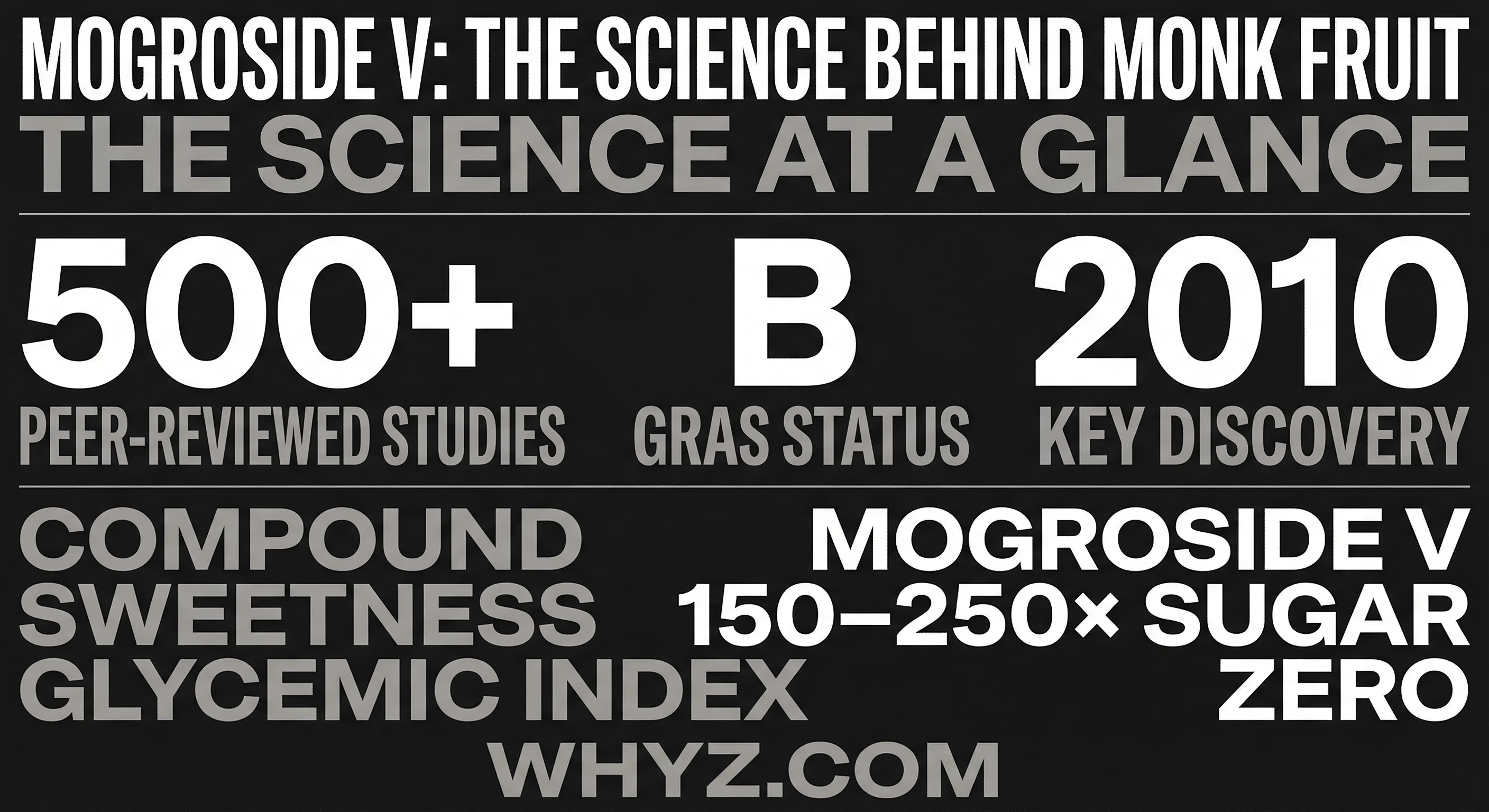
| Evidence Grade | B — Moderate (GRAS since 2010; strong safety data, emerging functional evidence) |
| Key Studies | Liu et al. 2019 (hypoglycemic/hypolipidemic mogroside effects, PMID: 30516208); Gong et al. 2019 (comprehensive review, PMID: 31849659) |
Monk fruit sweetener has gone from an obscure traditional Chinese remedy to one of the fastest-growing natural sweeteners on the market. But with dozens of products and claims on the shelf, and widespread confusion about how it actually works, most people are still guessing.
Below we cover what monk fruit is, how the sweetness works at a molecular level, its safety profile, how to use it in cooking and baking, and how it stacks up against stevia, erythritol, and sugar.
What Is Monk Fruit?
Monk fruit (Siraitia grosvenorii, also called Luo Han Guo) is a small green melon native to southern China and northern Thailand. It has been cultivated in China for centuries, primarily in the Guangxi province, and was historically used in traditional Chinese medicine as a treatment for sore throats and respiratory conditions.
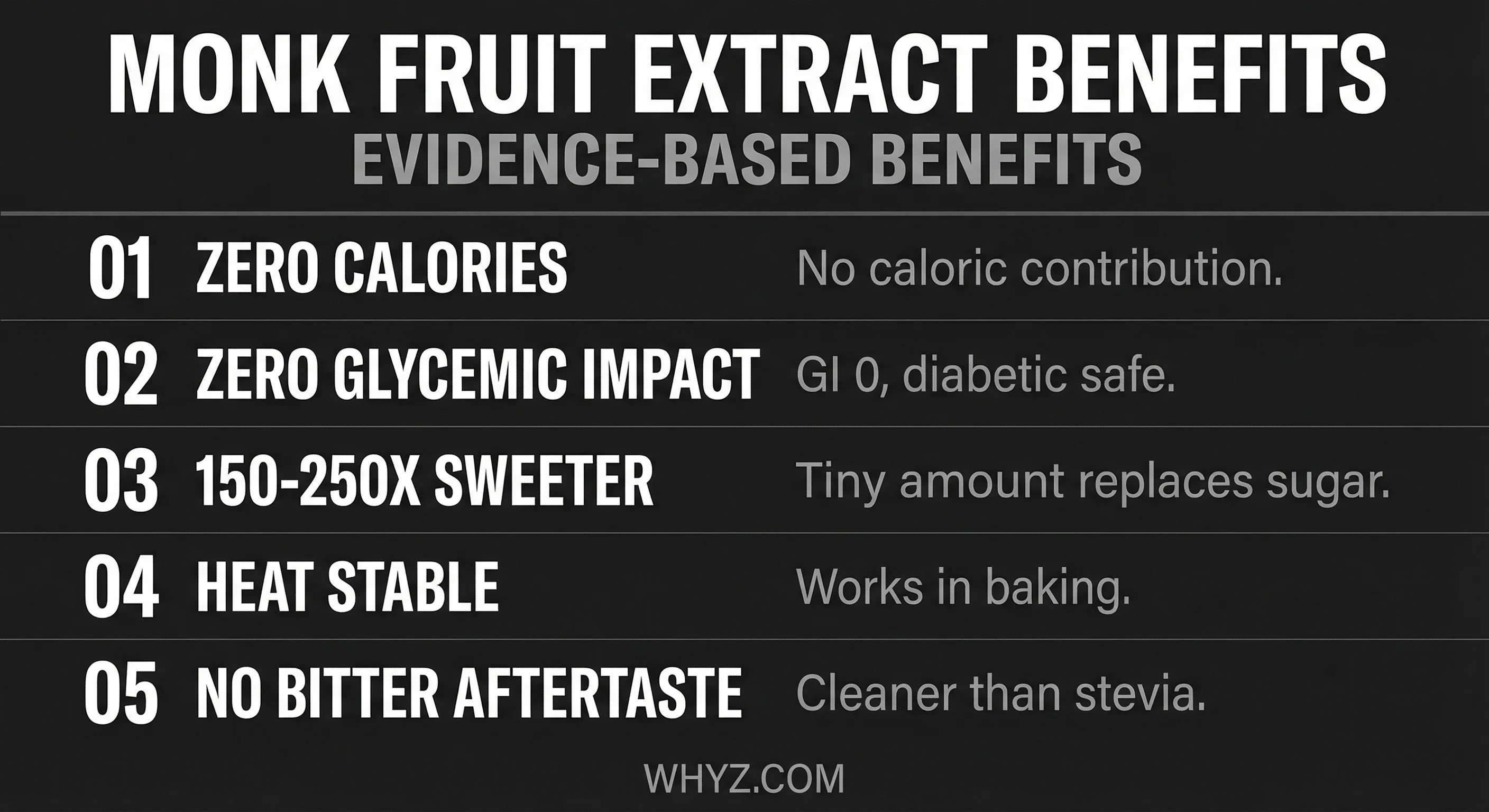
The fruit itself is not particularly sweet, but its dried form and extracts contain a class of compounds called mogrosides that are intensely sweet without contributing calories or affecting blood sugar.
The Mogrosides: How Sweetness Works
The sweetness in monk fruit comes from a family of triterpenoid glycosides collectively called mogrosides. Five major mogrosides have been identified (Mogroside I through Mogroside V), and it’s Mogroside V that is responsible for the majority of the sweetness.
Mogroside V is approximately 150–250 times sweeter than sucrose by weight. Unlike sugar, mogrosides are not metabolized in the upper digestive tract. They pass through to the colon where gut bacteria partially break them down. This means they contribute essentially zero calories.
Commercial monk fruit extracts are typically standardized to contain between 25% and 55% Mogroside V content. Higher Mogroside V content means a more potent extract with a cleaner, less “fruity” taste.
Is Monk Fruit Safe?
Monk fruit extract received GRAS (Generally Recognized As Safe) status from the FDA in 2010, and has been extensively safety-tested since then.
Key safety findings:
- No carcinogenicity: Multiple studies in rodents found no evidence of cancer-promoting effects at high doses [1]
- No mutagenicity: Ames test and other genotoxicity studies consistently show no mutagenic potential [2]
- No reproductive toxicity: No adverse effects on fertility or fetal development in animal studies [1]
- Well-tolerated in humans: No significant adverse effects reported in clinical trials or long-term consumer use
- No laxative effect: Unlike erythritol, sorbitol, and other sugar alcohols, monk fruit extract does not cause osmotic diarrhea at normal doses
The one caveat: some individuals may have an allergy to monk fruit (particularly those with gourd/melon allergies), though this is uncommon.
Is Monk Fruit Safe During Pregnancy?
Current evidence suggests monk fruit is safe during pregnancy at normal dietary amounts. It has GRAS status, no reproductive toxicity data in animals, and no documented adverse effects. That said, clinical data in pregnant humans is limited, and conservative guidance suggests “food amounts are likely safe; supplement doses should be discussed with a provider.”
Is Monk Fruit Safe for Diabetics?
Yes. Monk fruit has a glycemic index of zero and does not raise blood glucose or insulin levels. Multiple studies in both animals and humans confirm this. For individuals with type 1 or type 2 diabetes, monk fruit is one of the safest sweetener options available.
A 2019 study published in Food & Function found that mogroside-rich extract activated AMPK pathways, demonstrating hypoglycemic and hypolipidemic effects in mouse models [3]. Research suggests these mechanisms may have relevance to metabolic health in humans, though larger clinical trials are ongoing.
Monk Fruit vs. Sugar: A Direct Comparison
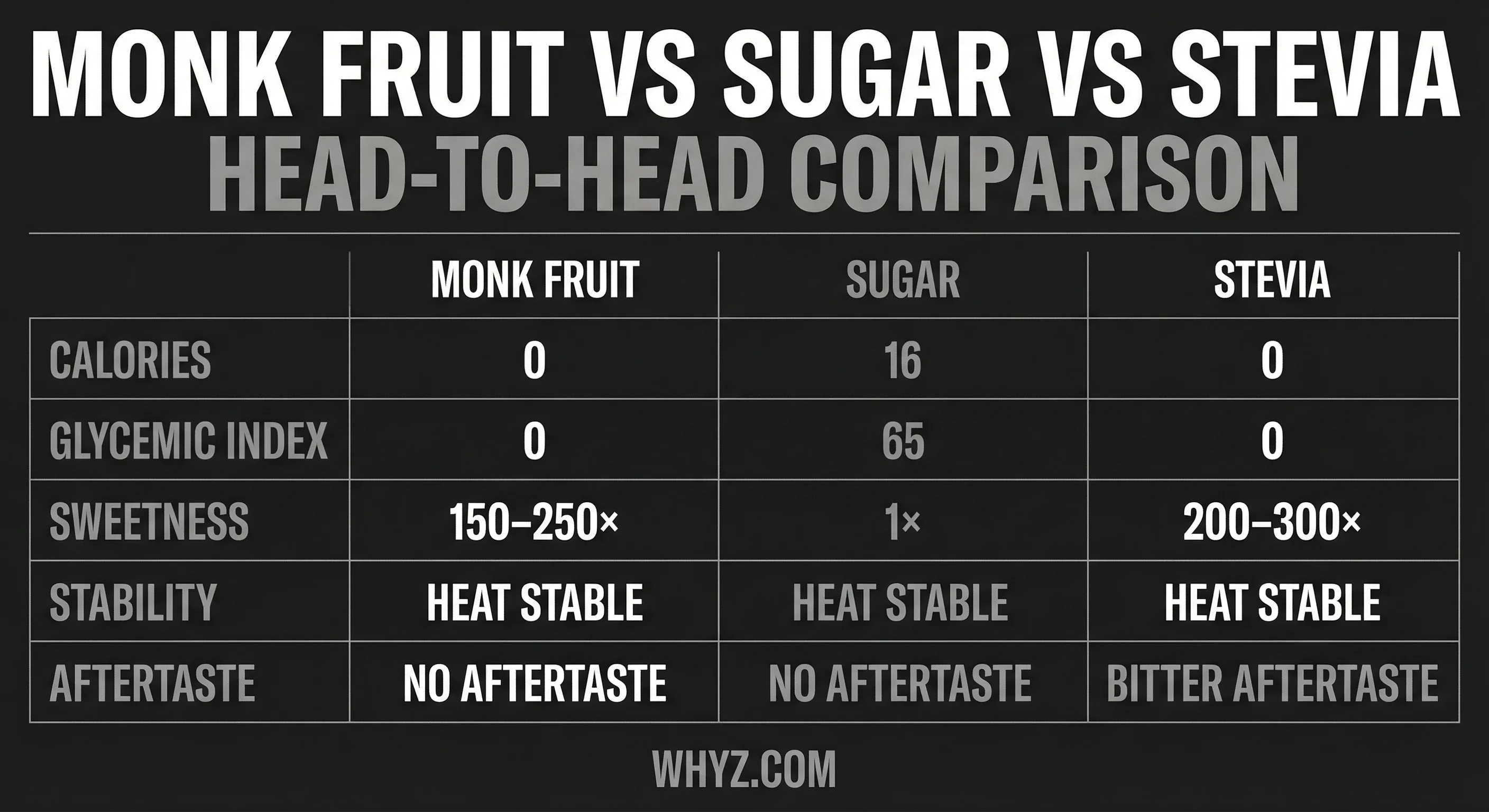
| Property | Sugar (Sucrose) | Monk Fruit Extract |
|---|---|---|
| Calories per gram | 4 kcal | ~0 kcal |
| Glycemic index | 65 | 0 |
| Sweetness relative to sugar | 1× | 150–250× |
| Affects blood glucose | Yes | No |
| Tooth decay risk | High | None |
| Browning in baking | Yes (Maillard) | Limited |
| Bulking properties | Yes | No (pure extract) |
| Fermentation by yeast | Yes | No |
| Aftertaste | None | Slight fruity/caramel at high doses |
The main functional differences to understand for baking are:
- No browning: Mogrosides don’t participate in Maillard reactions, so baked goods won’t brown the same way
- No bulk: Pure monk fruit extract is orders of magnitude sweeter than sugar, so a blend with erythritol is often used for 1:1 replacement
- No yeast food: Monk fruit can’t be used in yeast-leavened bread recipes as the sole sweetener
Monk Fruit vs. Stevia
These are the two most commonly compared natural zero-calorie sweeteners. Here’s how they differ:
| Property | Monk Fruit | Stevia |
|---|---|---|
| Source | Luo Han Guo melon | Stevia rebaudiana plant |
| Active compounds | Mogrosides | Steviol glycosides (Reb A, Reb M, etc.) |
| Sweetness vs. sugar | 150–250× | 150–350× |
| Aftertaste | Mild fruity/caramel | Bitter/licorice (Reb A) to clean (Reb M) |
| Heat stability | Excellent | Excellent |
| FDA status | GRAS | GRAS (highly purified extracts) |
| Price | Higher | Lower |
| Taste profile | Warmer, rounder | Cooler, lighter |
Bottom line: Monk fruit tends to taste “warmer” and more caramel-like, while stevia (especially Reb A) can have a bitter or licorice aftertaste. Many people find monk fruit’s taste profile more similar to sugar. Reb M stevia has a much cleaner profile and is the closest stevia gets to monk fruit in terms of taste. Personal preference matters most here, so we recommend trying both.
Monk Fruit vs. Erythritol
Many commercial “monk fruit” products are actually monk fruit + erythritol blends. This is because pure monk fruit extract is intensely concentrated and has no bulk, making it difficult to measure for home use. Erythritol provides the bulk and mouthfeel of sugar.
Pure monk fruit extract has one major advantage over erythritol: no digestive side effects. Erythritol at doses above ~30–50g can cause bloating, gas, and diarrhea in sensitive individuals. Some recent research has also raised cardiovascular questions around high erythritol intake, though this remains under investigation.
For the most versatile product, we recommend keeping pure monk fruit extract (WHYZ’s offering) as a pantry staple and using it where you need high-intensity sweetening without bulk.
How to Use Monk Fruit in Cooking & Baking
Conversion Chart
| Sugar Amount | Pure Monk Fruit Extract (50% Mogroside V) |
|---|---|
| 1 cup | ⅛ teaspoon |
| ½ cup | 1/16 teaspoon |
| ¼ cup | 1/32 teaspoon (a pinch) |
| 1 tablespoon | A very small pinch |
| 1 teaspoon | Barely a pinch |
Best Uses for Pure Monk Fruit Extract
- Beverages: Coffee, tea, smoothies, lemonade. Dissolves completely, no grittiness
- Sauces and dressings: Salad dressings, BBQ sauce, marinades
- Whipped cream and cream cheese frostings: Works well where no bulk is needed
- Chocolate: Ganache, hot chocolate, chocolate sauces
- Yogurt and smoothie bowls: Easy to dose precisely
Where Pure Extract Struggles
- Cakes and cookies: The lack of bulk means structure and texture will suffer; use a monk fruit/erythritol blend or add your own bulking agent (like inulin or xylitol)
- Bread: Yeast can’t ferment mogrosides; the sweetener won’t “feed” the rise
- Caramel: Won’t caramelize. Mogrosides don’t undergo Maillard or caramelization reactions
How heat-stable is monk fruit extract for cooking and baking?
Monk fruit extract is highly heat-stable — Mogroside V withstands temperatures up to 200°C (392°F) without degrading or losing sweetness intensity, making monk fruit one of the few natural zero-calorie sweeteners fully compatible with high-heat applications such as roasting, frying, and baked goods [4]. Research shows this thermal stability is a defining advantage over aspartame, which degrades above 180°C and is unsuitable for baking applications. First, Mogroside V’s triterpenoid backbone is chemically resistant to thermal decomposition at standard cooking temperatures. Second, monk fruit extract retains full sweetness potency after extended oven baking at 200°C in published stability studies. Third, heat stability applies equally to acidic and neutral pH conditions, making monk fruit suitable for hot sauces, jams, and carbonated beverages. This stability profile makes monk fruit extract one of the most versatile natural sweeteners available for both home and commercial food production.
What health benefits do monk fruit mogrosides provide beyond sweetness?
While the primary use of monk fruit is as a sweetener, the mogrosides, particularly Mogroside V, have been studied for additional bioactive properties:
Does monk fruit extract have measurable antioxidant activity?
Monk fruit mogrosides demonstrate measurable antioxidant activity across multiple preclinical models — a 2023 review of Siraitia grosvenorii bioactive compounds published in Foods (Duan et al.) confirmed that Mogroside V scavenges free radicals, inhibits lipid peroxidation, and activates endogenous antioxidant enzymes including superoxide dismutase (SOD) [4]. Research shows mogrosides are triterpenoid glycosides with structural properties that confer this antioxidant activity. First, Mogroside V directly scavenges reactive oxygen species in cell-based assays. Second, mogroside-rich extracts inhibit lipid peroxidation, a key driver of oxidative cell damage. Third, animal models demonstrate upregulation of endogenous antioxidant enzymes including SOD and catalase following mogroside administration. These findings are consistent across in vitro and in vivo models, though human clinical trials specifically measuring antioxidant biomarkers at dietary-equivalent doses remain limited.
How does monk fruit extract reduce inflammation?
Mogroside V, the primary bioactive compound in monk fruit extract, inhibits the NF-κB and COX-2 inflammatory pathways — the same molecular targets as many pharmaceutical anti-inflammatory drugs — with a 2024 comprehensive review in Frontiers in Pharmacology by Huang et al. confirming these anti-inflammatory effects across multiple preclinical models [5]. Studies demonstrate that Mogroside V suppresses NF-κB activation, reduces pro-inflammatory cytokine production including TNF-α and IL-6, and inhibits COX-2 enzyme expression in cell-based and animal models. First, Mogroside V blocks the NF-κB signaling pathway, a master regulator of inflammatory gene expression. Second, mogroside administration reduces circulating levels of inflammatory cytokines in rodent inflammation models. Third, the structural features of triterpenoid glycosides in monk fruit appear to underlie these anti-inflammatory mechanisms. Human clinical data evaluating anti-inflammatory outcomes at dietary-equivalent doses of monk fruit extract remains limited and is an active area of research.
Anti-Cancer Potential (Preliminary Only)
Some in vitro studies have shown mogrosides can inhibit the growth of certain cancer cell lines. This is very early-stage research with no clinical applications. Do not use monk fruit as a cancer treatment.
Important Caveat
Most of the health benefit research on mogrosides has been done in test tubes or rodents, at concentrations far higher than you’d get from sweetening your coffee. These are promising preliminary findings, not established clinical benefits.
How to Choose a Monk Fruit Extract
When buying monk fruit, look for:
- Standardized Mogroside V content: A good extract will state the percentage. 25–55% Mogroside V is standard for pure extracts. Higher = more potent.
- Minimal ingredients: Pure monk fruit extract needs only monk fruit, with no fillers, dextrose, or maltodextrin (which add carbs and affect blood sugar).
- No artificial sweeteners added: Some cheaper products cut monk fruit with sucralose or acesulfame-K.
- Third-party tested: A Certificate of Analysis (COA) from an independent lab confirms potency and purity.
WHYZ Monk Fruit Extract is a pure, single-ingredient powder with no additives, standardized for Mogroside V content. Every batch is third-party tested with a COA available on request.
Frequently Asked Questions
Can I use monk fruit if I’m following a keto diet? Yes. Monk fruit has zero net carbs and a glycemic index of zero. It is one of the most keto-friendly sweeteners available.
Does monk fruit have an aftertaste? At normal doses, most people describe no significant aftertaste, or a subtle warm, slightly fruity or caramel-like note. At very high doses, some detect a mild bitterness. This is generally considered much less noticeable than stevia’s aftertaste.
Can children use monk fruit? Monk fruit is FDA GRAS, which applies to all populations including children. It is a reasonable alternative to sugar for kids. As with all concentrated sweeteners, use in moderation.
Does monk fruit interact with medications? No significant drug interactions have been documented. Individuals on diabetes medications should be aware that monk fruit may have additive blood-sugar-lowering effects, though the magnitude is likely modest.
Is monk fruit the same as Luo Han Guo? Yes. Luo Han Guo is the Chinese name for the same fruit (Siraitia grosvenorii). The extract is sometimes labeled either way.
Why Choose WHYZ
WHYZ Monk Fruit Extract is a single-ingredient product with no fillers, no artificial additives, and no proprietary blends. Unlike most commercial monk fruit sweeteners that use erythritol as a bulking agent, WHYZ is pure mogroside V extract — nothing added, nothing hidden. Every batch is third-party tested for purity and potency.
- Pure single ingredient — no erythritol, no inulin, no maltodextrin fillers
- Third-party tested — Certificate of Analysis available for every batch
- Transparent labeling — what’s on the label is what’s in the container
- Standardized potency — 50%+ mogroside V, so conversions are predictable
Related Ingredients
- Stevia — The other leading natural zero-calorie sweetener; compare taste profiles and evidence
- Inositol — Metabolic health support; combines well with a low-glycemic diet
Related Guides
- Monk Fruit vs Stevia: A detailed taste, safety, and cost comparison of the two leading natural zero-calorie sweeteners.
- Monk Fruit vs Erythritol: Why most “monk fruit” products are mostly erythritol, and how the two differ on digestive tolerance and safety.
- Does Monk Fruit Break a Fast?: Whether monk fruit sweetener disrupts fasting for weight loss, autophagy, or blood sugar management.
- Best Sweetener for Keto: How monk fruit compares to stevia, erythritol, and allulose for a ketogenic diet.
- Sweetener Conversion Calculator: Interactive tool for converting between monk fruit, stevia, erythritol, and sugar.
Source in Bulk
Looking to source bulk monk fruit extract powder for manufacturing or formulation? WHYZ supplies wholesale quantities with COA documentation and free evaluation samples. Request a quote →
References
- Pawar RS, Krynitsky AJ, Rader JI. “Sweeteners from plants — with emphasis on Stevia rebaudiana (Bertoni) and Siraitia grosvenorii (Swingle).” Anal Bioanal Chem. 2013;405(13):4397-407. PMID: 23341001.
- Gong X et al. “The Fruits of Siraitia grosvenorii: A Review of a Chinese Food-Medicine.” Front Pharmacol. 2019;10:1400. PMID: 31849659.
- Liu H et al. “AMPK activation is involved in hypoglycemic and hypolipidemic activities of mogroside-rich extract from monk fruit.” Food Funct. 2019;10(2):1070-1081. PMID: 30516208.
- Duan J et al. “Siraitia grosvenorii (Swingle) C. Jeffrey: Research Progress of Its Active Components, Pharmacological Activities and Applications.” Foods. 2023;12(4):862. PMID: 37048193.
- Huang H et al. “A comprehensive review of Siraitia grosvenorii (Swingle) C. Jeffrey: chemical composition, pharmacological activities and applications.” Front Pharmacol. 2024;15:1372053. PMID: 38638866.
- Guo Q et al. “Recent Advances in the Distribution, Chemical Composition, Health Benefits, and Application of the Fruits of Siraitia grosvenorii.” Foods. 2024;13(19):3142. PMID: 39063362.